How Many Species of Otter Are There? — All 13, Including the Sea Otter
There are 13 living species of otter, all in the subfamily Lutrinae of the weasel family. They live on every continent except Australia and Antarctica. Only two are truly marine: the sea otter of the North Pacific and the small marine otter of Peru and Chile. The rest live mainly in rivers, lakes, wetlands and along coasts. According to the IUCN, 12 of the 13 species are declining or threatened in at least part of their range.
Most people picture one of two otters: the sea otter floating on its back in a kelp bed, or a river otter sliding down a muddy bank. In fact the otter family is much broader, with thirteen species spread across the Americas, Europe, Africa and Asia. They range from a small-clawed otter that weighs a few kilograms to a six-foot giant of the Amazon. They share a body plan, long and supple with dense fur, webbed feet and a strong tail, but their diets, social lives and habitats vary enormously.
Because TheSea.Org is about the ocean, our otter coverage centres on the sea otter. But you cannot really understand the sea otter without seeing where it sits among its relatives, and why it is the odd one out.
The 13 otter species at a glance
| Species | Scientific name | Range | IUCN |
|---|---|---|---|
| Sea otter | Enhydra lutris | North Pacific coasts | Endangered |
| Marine otter | Lontra felina | Pacific coast of Peru and Chile | Endangered |
| Giant otter | Pteronura brasiliensis | Amazon, Orinoco, La Plata basins | Endangered |
| North American river otter | Lontra canadensis | Canada and USA | Least Concern |
| Neotropical otter | Lontra longicaudis | Mexico to Argentina | Near Threatened |
| Southern river otter | Lontra provocax | Southern Chile and Argentina | Endangered |
| Eurasian otter | Lutra lutra | Europe, Asia, North Africa | Near Threatened |
| Hairy-nosed otter | Lutra sumatrana | Southeast Asia | Endangered |
| Smooth-coated otter | Lutrogale perspicillata | South and Southeast Asia, Iraq | Vulnerable |
| Asian small-clawed otter | Aonyx cinereus | South and Southeast Asia | Vulnerable |
| African clawless otter | Aonyx capensis | Sub-Saharan Africa | Near Threatened |
| Congo clawless otter | Aonyx congicus | Congo Basin | Near Threatened |
| Spotted-necked otter | Hydrictis maculicollis | Sub-Saharan Africa | Near Threatened |
Taxonomy is not completely settled: some authorities treat the Congo clawless otter as a subspecies of the African clawless otter, which would make twelve species. Most current lists, including the IUCN Otter Specialist Group’s, recognise thirteen.
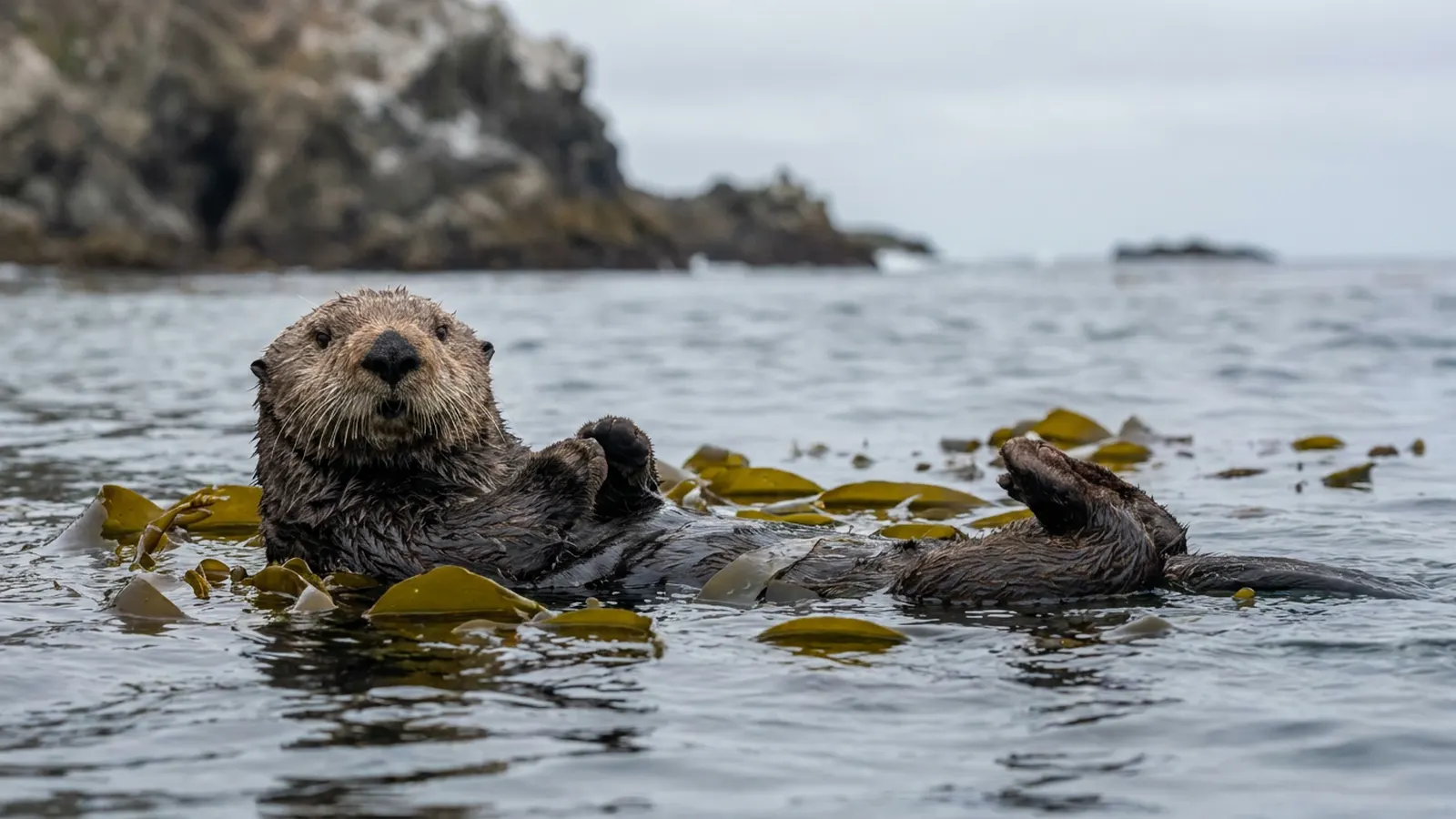
The marine otters: sea otter and marine otter
Only two otters live mainly in the sea, and they are very different animals on opposite sides of the Pacific.
The sea otter is the only otter that can live its whole life without coming ashore. It is the heaviest otter, with males up to about 45 kg, keeps warm with the densest fur of any animal, eats shellfish and urchins, and uses rocks as tools. It is also the only member of its genus, Enhydra, and is distinctive enough that it is often placed apart from the other otters. Our main sea otter guide and sea otter adaptations cover it in depth.
The marine otter (Lontra felina), called chungungo in Chile, is the smallest marine mammal, usually 3–6 kg. It lives along wave-battered rocky shores of Peru and Chile, feeding on crabs, shrimp, molluscs and fish, and rests in caves and crevices on land. Despite the name, it is more closely related to river otters than to the sea otter.
The American river otters
The genus Lontra holds four American species. The North American river otter is the only otter listed as Least Concern; after declines from trapping and pollution, reintroductions and cleaner rivers have brought it back across much of the US. It also lives along salt-water coasts in places such as Alaska, British Columbia and Florida, where it is sometimes mistaken for a sea otter; see sea otters vs river otters. The neotropical otter lives in rivers from Mexico to Argentina, the southern river otter in rivers and coasts of Patagonia, and the marine otter, described above, on the Pacific shore.
The giant otter
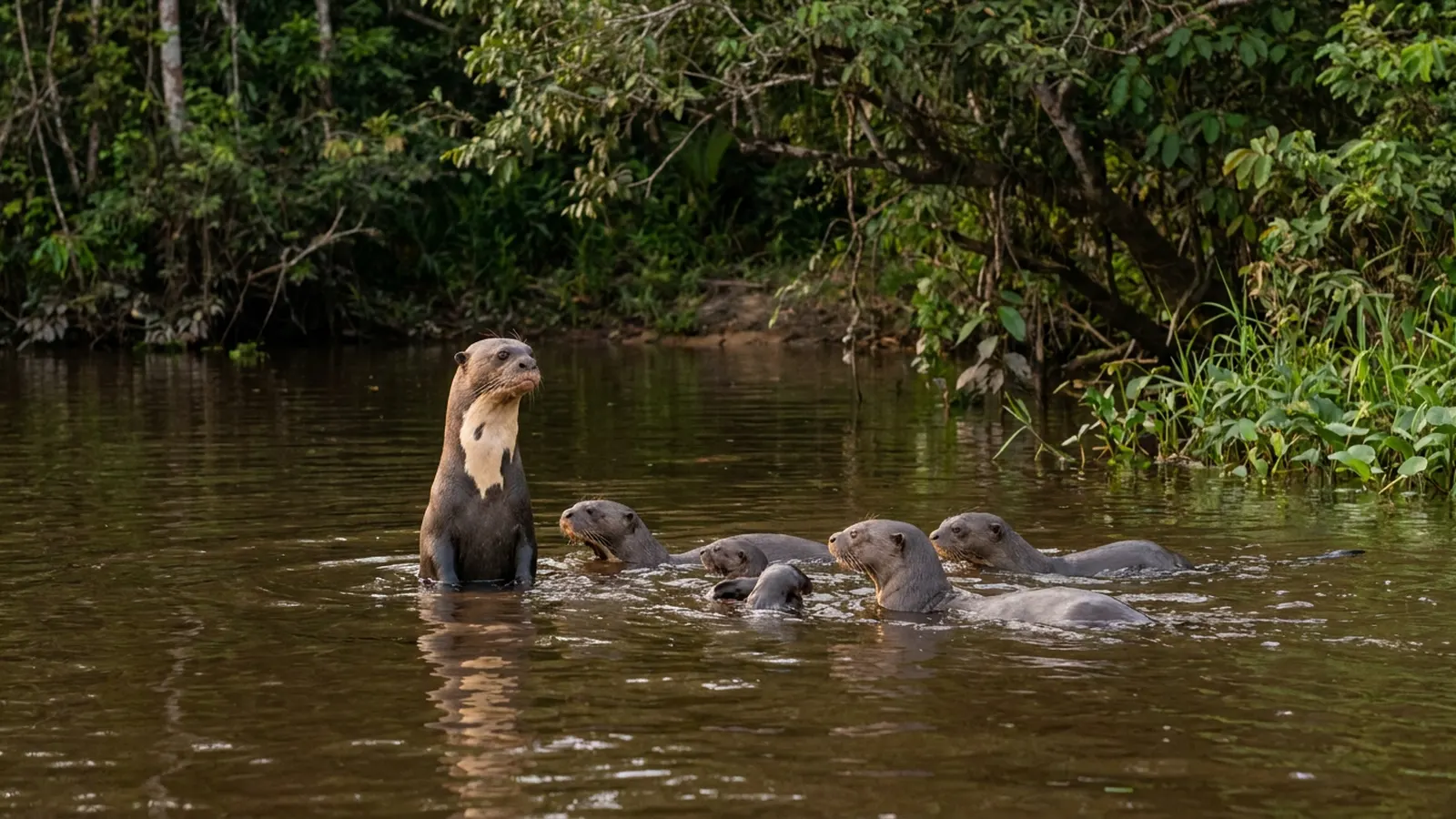
The giant otter of South America is the longest otter, up to about 1.8 m, and the most social, living in loud family groups that hunt fish together and defend territories against caimans and even jaguars. It was heavily hunted for its pelt until the 1970s and is listed as Endangered. We compare it with the sea otter in the largest otter species.
The Eurasian and Asian otters
The Eurasian otter has one of the widest ranges of any mammal, from Ireland and Portugal across Europe and Asia to Japan and Indonesia, plus North Africa. It nearly vanished from much of Western Europe in the mid-20th century, poisoned by pesticides, and has recovered strongly since those chemicals were banned. In Scotland and Norway it often lives on rocky coasts, feeding in the sea and washing in fresh water. The hairy-nosed otter of Southeast Asia is one of the rarest and least known, once thought possibly extinct and rediscovered in the late 1990s. The smooth-coated otter lives in family groups that hunt fish cooperatively, and has become famous in Singapore, where families roam urban waterways. The Asian small-clawed otter is the smallest species, with tiny claws and nimble fingers for catching crabs; its popularity as a pet led to its listing on CITES Appendix I in 2019. See can you have a sea otter as a pet?
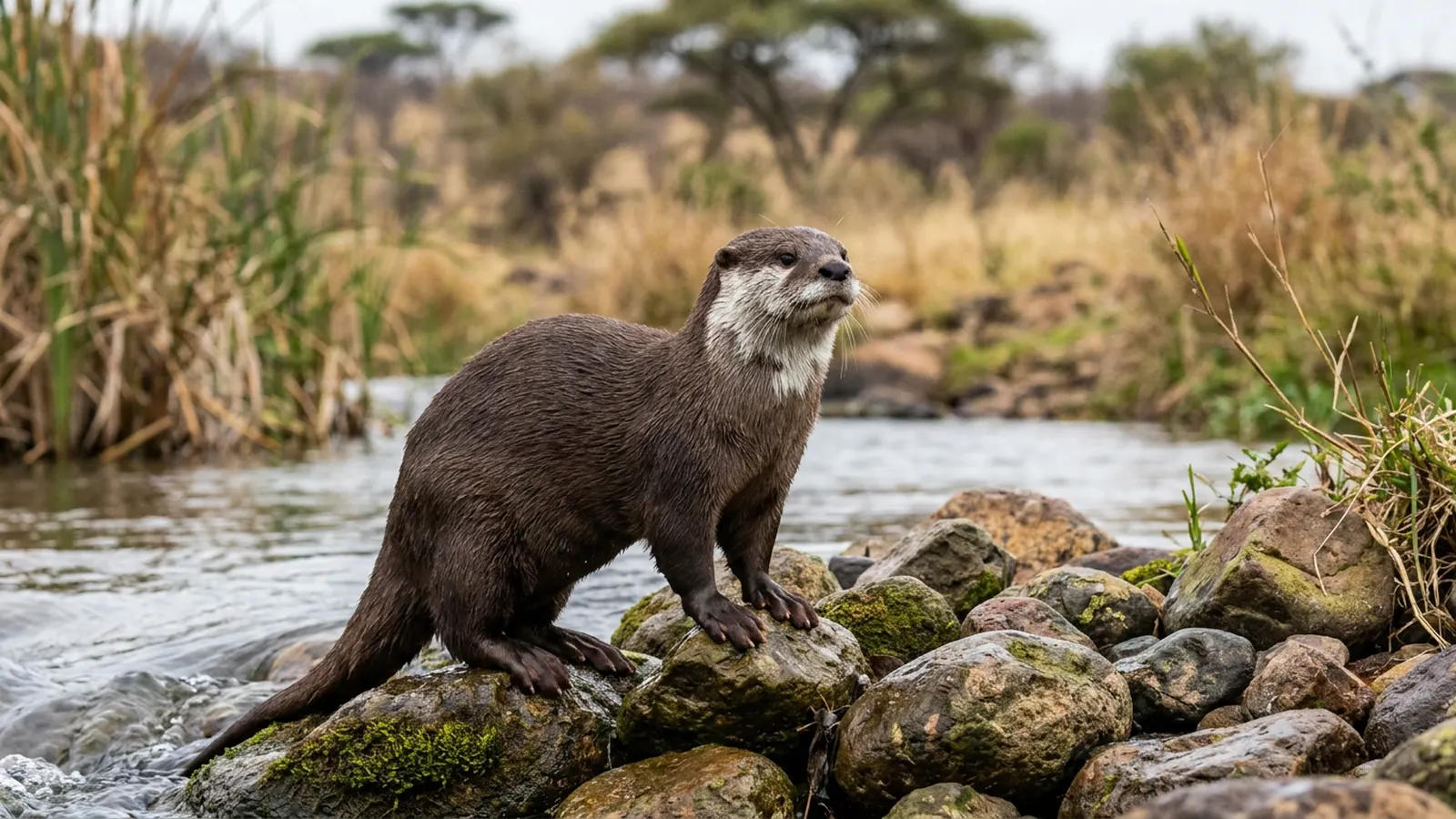
The African otters
Africa has three species. The African clawless otter is the largest, with dexterous, mostly clawless fingers used to feel for crabs under rocks; along South Africa’s coast it forages in the sea. The Congo clawless otter lives in the rainforest streams of the Congo Basin and is poorly studied. The spotted-necked otter is a slim, fish-eating otter of clear lakes and rivers, recognisable by the cream blotches on its throat, and is common in places such as Lake Victoria and Lake Malawi.
What otters have in common
Every otter is a predator, mostly of fish, crustaceans and molluscs. All have dense, waterproof fur rather than blubber, which is why they spend so much time grooming. All have long bodies, short legs, webbed feet to varying degrees and sensitive whiskers that help them hunt in murky water. And most are under pressure: habitat loss, polluted water, fishing conflicts, road deaths and the illegal pet and fur trades all threaten otters somewhere. The sea otter’s story of near-extinction and partial recovery is repeated, in different forms, across the family.
From my years keeping aquariums, I have found that people care about the animals they understand. Learning that there are thirteen otters, not two, and that one of them is the smallest marine mammal on Earth, is a good way into caring about all of them.
Where otters came from
Otters are thought to have split from other mustelids, the line that includes badgers, martens and weasels, somewhere in the Miocene, perhaps 15 to 20 million years ago, probably in Eurasia. From there they spread into Africa and, across land connections, into the Americas. The fossil record includes some remarkable forms: Siamogale melilutra, a wolf-sized otter from about six million years ago in China, and Enhydriodon, a group of large otter relatives from Africa and Asia, one of which may have weighed around 200 kg. Many fossil otters had crushing teeth similar to the sea otter’s, suggesting that shellfish-eating has evolved more than once in the family.
The sea otter’s own lineage is old. Fossils of related marine otters are known from the North Pacific region from a few million years ago, and the modern sea otter appears in the fossil record in the last couple of million years. Over that time the cold, productive coasts of the North Pacific, with their kelp forests and abundant shellfish, shaped it into the specialist we see today.
How to tell common otters apart
In the field, three quick checks help. Look at the tail: a sea otter’s is short and flattened, a river otter’s long and tapering, a giant otter’s long and paddle-shaped. Watch the posture: sea otters float on their backs to eat and rest, while most other otters swim belly-down and eat on land or a log. And note the setting: in the North Pacific, an otter in a kelp bed far from shore is almost certainly a sea otter, while one running along the beach or diving in a harbour mouth may well be a river otter.
Why the sea otter is the odd one out
Compared with the other twelve, the sea otter is extreme in almost every way. It is the heaviest otter, the only one that rarely or never comes ashore, the only one with crushing, flattened molars specialised for shellfish, the only one that routinely uses stone tools, and the only one that floats on its back to eat. It also lacks the scent glands other otters use to mark territory. Its hind feet are more flipper-like than any other otter’s, and its fur is far denser. Those differences reflect a lineage that has lived in the cold North Pacific for millions of years, separate from the river otters that gave rise to the marine otter of South America.
How many species of otter are there?
Thirteen living species, in the subfamily Lutrinae of the weasel family.
How many kinds of otters live in the ocean?
Two are truly marine: the sea otter and the marine otter. Several others, such as the Eurasian and North American river otters, also forage along sea coasts.
What is the smallest otter?
The Asian small-clawed otter, usually under 5 kg.
What is the largest otter?
The giant otter is the longest; the sea otter is the heaviest.
Which otters are endangered?
The sea otter, marine otter, giant otter, southern river otter and hairy-nosed otter are listed as Endangered; most others are Vulnerable or Near Threatened.
Are there otters in Australia?
No. Otters live on every continent except Australia and Antarctica.
- IUCN SSC Otter Specialist Group: otter species list and status.
- IUCN Red List assessments for the 13 Lutrinae species.
- Kruuk, H. (2006). Otters: Ecology, Behaviour and Conservation. Oxford University Press.
- CITES CoP18 (2019): transfer of Aonyx cinereus and Lutrogale perspicillata to Appendix I.
Blane Perun has been exploring Earth’s oceans and marine life for over 25 years. Founder of TheSea.Org in 1999, underwater photographer, coral aquaculture pioneer, and explorer of 80+ countries.
About Blane Perun → More on sea otters →