Young Jacques Cousteau — A Sickly Boy, a Naval Officer, a Car Crash and a Pair of Goggles
Jacques-Yves Cousteau was born on 11 June 1910 in Saint-André-de-Cubzac, near Bordeaux, France. He was a sickly child who loved machines and film, spent part of his boyhood in the United States, and entered the French naval academy in 1930. He planned to become a naval pilot until a serious car accident in the mid-1930s ended that plan. While swimming to rebuild his strength near Toulon, a fellow officer lent him a pair of diving goggles, and his first look underwater set the course of his life.
It is hard to imagine Jacques Cousteau as anything other than the lean, weathered captain in a red cap. But the young Cousteau was a frail boy who was told to avoid strenuous exercise, a teenager who was thrown out of school, and a young officer who wanted to fly, not swim. Several accidents of fate, one of them a literal accident, pushed him toward the sea. This page follows his life from birth to the late 1930s, when he first put on a pair of goggles and looked beneath the surface of the Mediterranean.
Birth and family
Cousteau was born in his grandparents’ town of Saint-André-de-Cubzac, on the Dordogne river near Bordeaux, the second son of Daniel and Élisabeth Cousteau.
His father was a lawyer who worked as a legal adviser and secretary to wealthy American businessmen, a job that kept the family travelling between Paris, the French resorts and, for a time, the United States. Jacques had one brother, Pierre-Antoine, four years older. Pierre-Antoine became a journalist, and during the Second World War he took the side of the Vichy regime and the occupying Germans; after the war he was sentenced to death for collaboration, a sentence later commuted. The brothers’ paths could hardly have diverged more, and it was a painful episode for the family. Jacques, by contrast, served with the French Navy and the Resistance during the war.
Saint-André-de-Cubzac remembers him well. He is buried there in the family vault, and the town has a memorial to its most famous son.
A sickly child who loved water and machines
As a young boy Cousteau suffered from chronic stomach trouble and anaemia, and doctors advised his parents to keep him away from strenuous activity.
He was drawn to water anyway, and learned to swim early. He was also fascinated by how things worked. As a boy he built models of machines, including, according to his own accounts, a battery-powered car and a model crane, and he saved his pocket money to buy one of the first home movie cameras, a Pathé Baby, which he used to film his family and friends and to make little films of his own. The two interests that would shape his life, the sea and the camera, were already in place before he was a teenager.
When the family lived in the United States for a time in the early 1920s, the young Jacques went to a summer camp in Vermont. In an often-told story, he was given the job of clearing dead branches from the bottom of the camp’s lake, which meant repeated breath-hold dives into cold, murky water. It was hardly glamorous work, but he said later that it gave him his first taste of working underwater.
Trouble at school
Back in France, Cousteau was not a model pupil.
He was bright but bored, and he was eventually expelled from his school in Paris after breaking a string of windows. His parents sent him to a strict boarding school in Alsace, where the discipline seems to have worked. He settled down, studied hard and prepared for the entrance examinations to the École navale, the French naval academy in Brest, which had a reputation as one of the toughest schools in France.
Looking back, the pattern is easy to see. Cousteau was never good at sitting still or following rules he did not understand, but once he found something that held his attention he would work at it relentlessly. The same restlessness that got him expelled later drove him to test equipment that might kill him, to talk his way into funding for a ship, and to keep filming when everyone around him had given up. The navy gave that energy a structure. It taught him discipline, seamanship, mechanics and how to lead a crew, all of which he would need on Calypso. It also gave him access to the sea, the one thing he could not have found in a Paris classroom.
Naval school and a voyage round the world
Cousteau entered the École navale in 1930 and graduated as a gunnery officer.
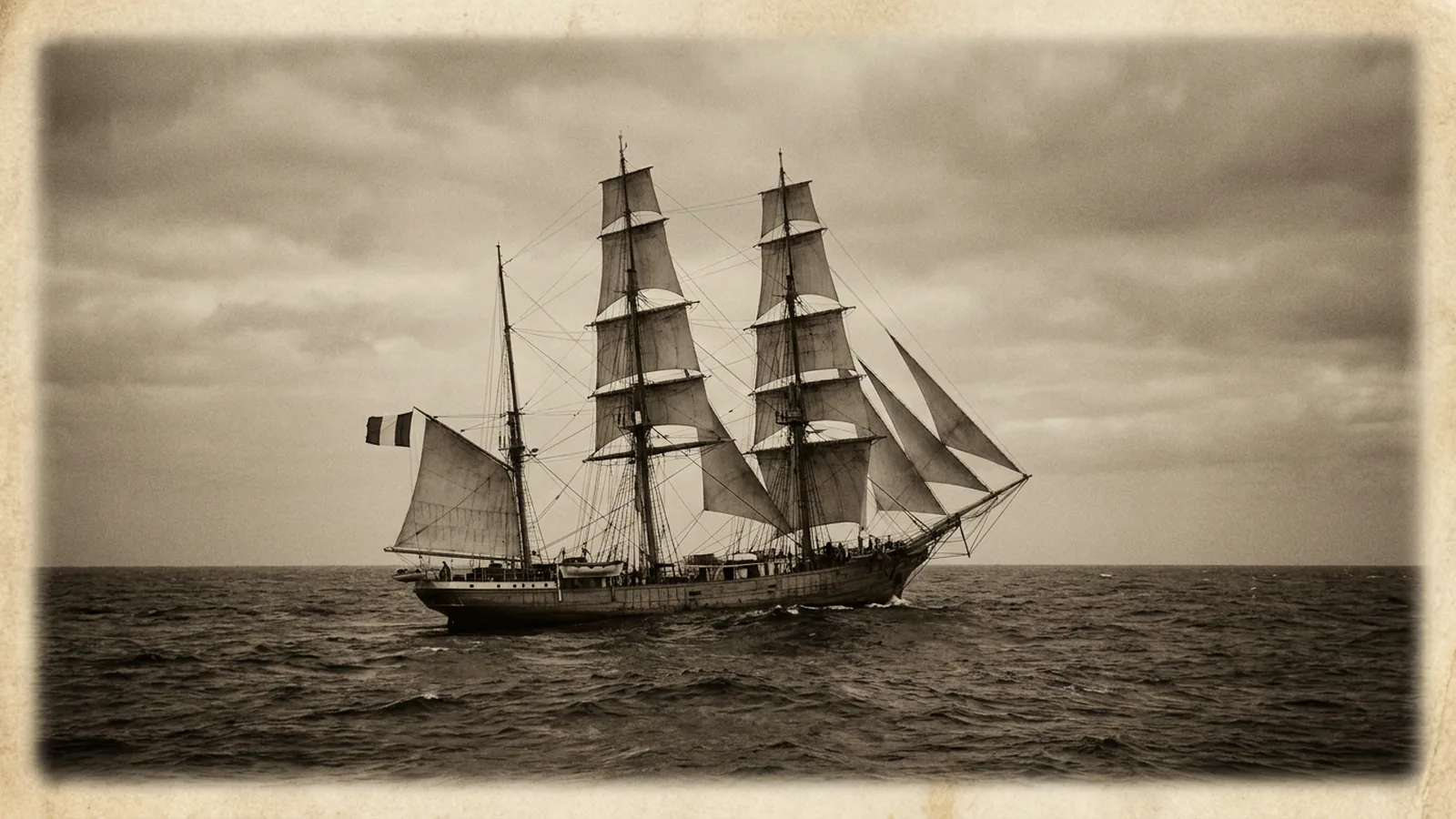
As part of his training he sailed around the world aboard the training cruiser Jeanne d’Arc, a voyage that took him to ports across Asia and the Pacific. He took his camera along and filmed much of what he saw. He was later posted to the French naval base in Shanghai and made trips in the Far East, again filming as he went. By the mid-1930s he was a capable young officer with a gift for languages and a growing reputation as an amateur filmmaker. Even then he was thinking like a filmmaker as much as a sailor, and the habit of filming everything he saw on his travels never left him. His ambition, though, was to fly. He applied to become a naval aviator and was accepted for flight training.
The car crash that changed everything
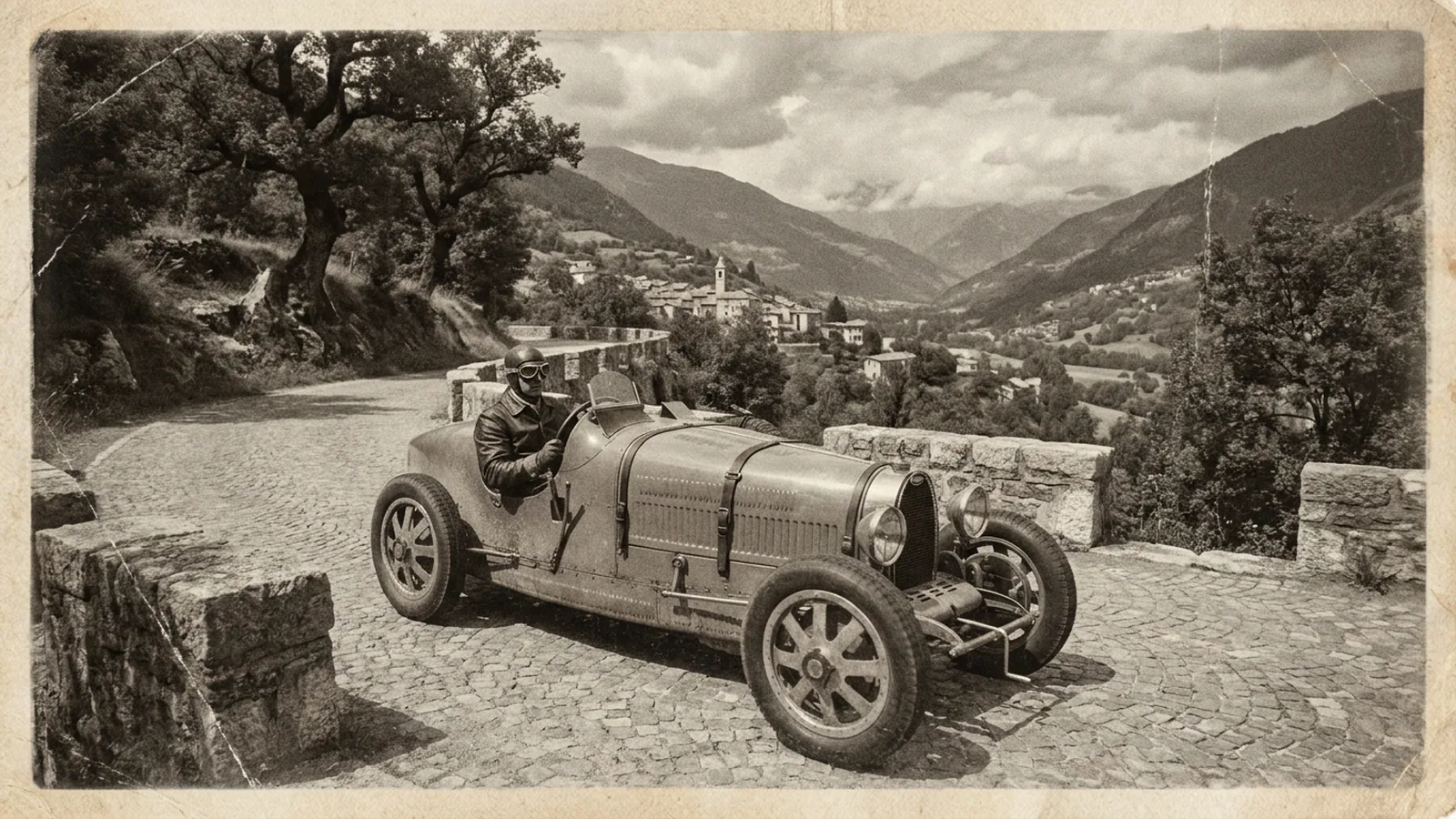
Just before he was due to complete his aviation training, Cousteau was badly injured in a car accident.
Driving his father’s sports car on a mountain road at night, he crashed and suffered serious injuries, including multiple fractures of his arms. Some accounts put the accident in 1935 and others in 1936. Doctors at one point considered amputating his left arm. He refused, and spent months in painful recovery. The injuries ended his career as a pilot, and he was sent back to the fleet as a gunnery officer at Toulon on the Mediterranean.
To rebuild his strength, he was advised to swim in the sea every day. It is one of history’s more useful accidents: had he become a naval aviator, the Aqua-Lung might have been invented by someone else, years later.
The first look underwater
At Toulon, Cousteau met Philippe Tailliez, a fellow naval officer and keen spearfisherman. Tailliez lent him a pair of Fernez underwater goggles.
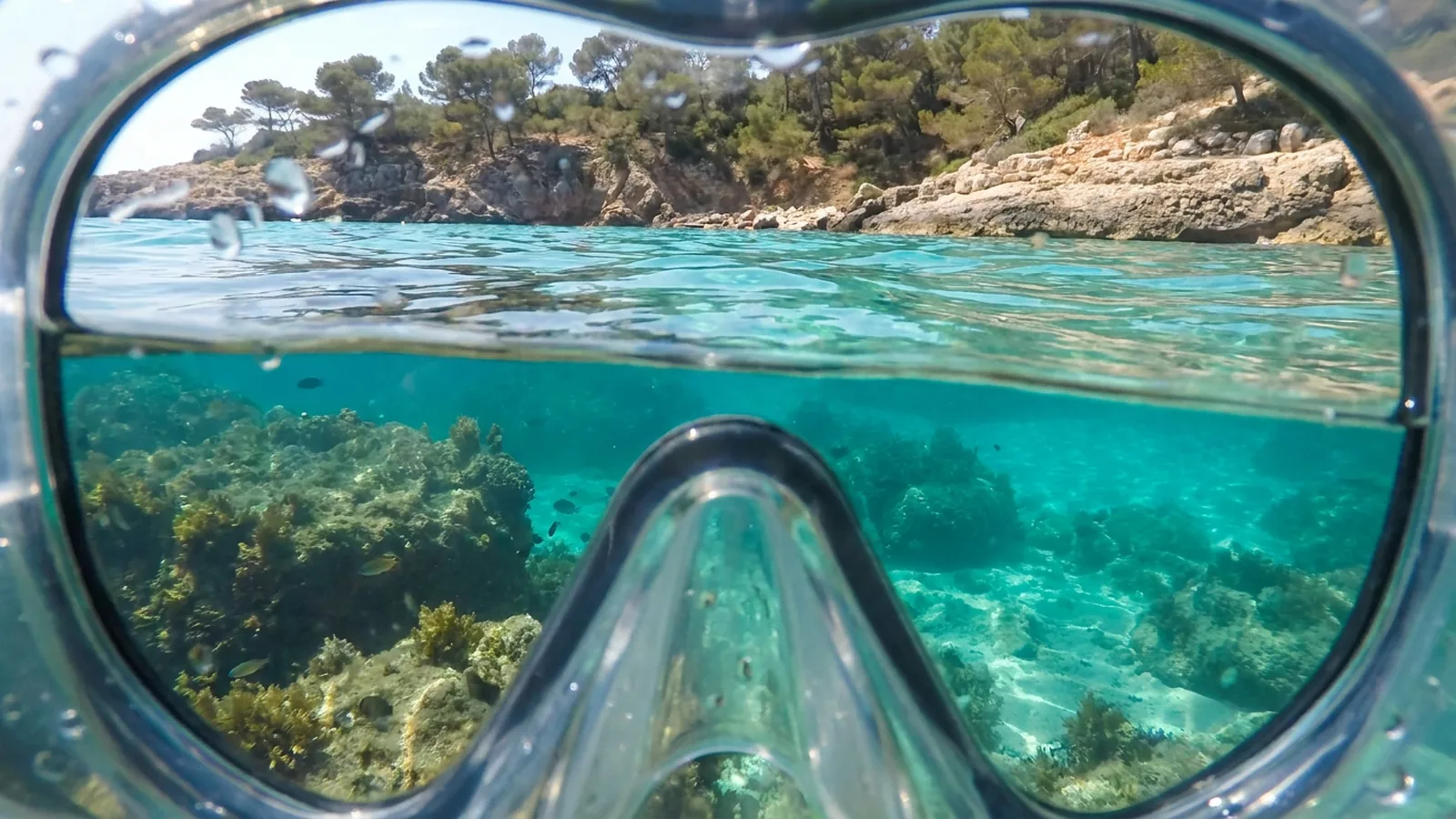
One day in 1936, at Le Mourillon near Toulon, Cousteau put on the goggles and looked down into the water. He later described it as the moment his life changed: he saw fish, rocks and seaweed with perfect clarity, and realised that a whole world lay just beneath the surface that he had never really seen. He began spending every spare hour in the water. Through Tailliez he met Frédéric Dumas, a civilian breath-hold diver of remarkable skill, and the three became inseparable, calling themselves the mousquemers, the “sea musketeers”.
Anyone who has put a mask on and looked down at a reef for the first time will understand what Cousteau felt. You can see the same reaction in anyone snorkelling for the first time on clear Caribbean water, the sudden realisation that the sea is full of life you could never see from a boat. For Cousteau, the frustration was how little time he could stay down on one breath, and that frustration led directly to the invention he is most famous for.
| Year | Event |
|---|---|
| 1910 | Born 11 June in Saint-André-de-Cubzac |
| Early 1920s | Family lives in the United States; summer camp in Vermont |
| 1920s | Expelled from school in Paris; boarding school in Alsace |
| 1930 | Enters the École navale |
| Early 1930s | Round-the-world training cruise on the Jeanne d’Arc |
| 1935–36 | Car accident ends his naval aviation plans |
| 1936 | First look underwater with Fernez goggles at Le Mourillon |
| 1937 | Marries Simone Melchior |
| 1942 | Films Par dix-huit mètres de fond on breath-hold |
| 1943 | Develops the Aqua-Lung with Émile Gagnan |
From goggles to the Aqua-Lung
In 1937 Cousteau married Simone Melchior, and through her family he would soon meet the engineer who helped him solve the problem of breathing underwater.
Through the late 1930s and early war years, Cousteau, Tailliez and Dumas experimented with every kind of diving equipment they could find, including oxygen rebreathers that nearly killed Cousteau twice. In 1942, during the German occupation, they made a short underwater film, Par dix-huit mètres de fond (“Eighteen Metres Deep”), using breath-hold diving. Then, in 1943, Cousteau and Émile Gagnan, an engineer at the industrial gas company where Simone’s father worked, adapted a gas regulator into a demand valve that delivered compressed air to a diver at the right pressure. The Aqua-Lung was born, and with it modern scuba diving. Our page on the Aqua-Lung tells that story in detail, and The Silent World is Cousteau’s own account.
From there the story is the one most people know: the Navy’s Undersea Research Group, Calypso, the films and the television series. But it all goes back to a sickly boy who loved cameras, a car crash on a dark road and a borrowed pair of goggles. For the rest of his life, see our full Jacques Cousteau biography and the story of his family.
Where was Jacques Cousteau born?
In Saint-André-de-Cubzac, in the Gironde department near Bordeaux, France, on 11 June 1910.
Was Jacques Cousteau in the navy?
Yes. He entered the French naval academy in 1930, served as a gunnery officer and remained a naval officer until the late 1950s.
Why didn’t Cousteau become a pilot?
A serious car accident in the mid-1930s, which badly broke his arms, ended his naval aviation training.
When did Jacques Cousteau first dive?
His life-changing first look underwater with goggles was at Le Mourillon, near Toulon, in 1936. He had made breath-hold dives earlier as a boy at a summer camp in Vermont.
Did Jacques Cousteau live in America?
Yes, briefly as a boy in the early 1920s, when his father’s work took the family to the United States.
Who introduced Cousteau to diving?
His fellow naval officer Philippe Tailliez, who lent him a pair of Fernez goggles and introduced him to Frédéric Dumas.
- Cousteau, J.-Y. & Dumas, F. (1953). The Silent World. Harper & Brothers.
- Matsen, B. (2009). Jacques Cousteau: The Sea King. Pantheon.
- Encyclopædia Britannica, “Jacques Cousteau”.
- Madsen, A. (1986). Cousteau: An Unauthorized Biography. Beaufort Books.
Blane Perun has been exploring Earth’s oceans and marine life for over 25 years. Founder of TheSea.Org in 1999, underwater photographer, coral aquaculture pioneer, and explorer of 80+ countries.
About Blane Perun → More on Jacques Cousteau →