Sea Otter Skeleton — Loose Skin, Flexible Spine and Webbed Feet
The sea otter skeleton is a weasel skeleton rebuilt for life at sea. It has an unusually flexible spine and no collarbone, so the otter can twist and reach every part of its fur while grooming; a broad skull with flat, rounded molars for crushing shells; short forelimbs for handling food; and long, flattened hind-foot bones that support webbed, flipper-like feet. In otters that eat many sea urchins, the bones can even be stained purple.
Look at a sea otter skeleton in a museum and two things jump out. First, it is clearly a weasel: long-bodied, short-legged, with a skull shaped like an oversized mink’s. Second, the details are all wrong for a land animal. The back feet are long paddles, the cheek teeth are flat grinding stones rather than slicing blades, and the whole frame seems designed to bend. Those details are the story of an animal that left the land behind and became the smallest fully marine mammal in the North Pacific.
I have always liked looking at skeletons for the same reason I like looking at the plumbing under a reef tank: you see how the system really works. The outside of a sea otter is fur and whiskers. The inside is engineering.
A weasel built for the sea
Sea otters belong to the Mustelidae, the family of weasels, badgers, minks and other otters. Their basic skeleton follows the family plan.
Mustelids typically have long, flexible bodies, short legs and strong jaws. The sea otter keeps that plan but scales it up: it is the heaviest mustelid, with large males reaching 45 kg. Compared with a river otter, its body is stockier and its tail much shorter, about a quarter to a third of its body length. Its bones are robust, as you would expect in an animal that wrestles crabs and cracks shells, and its large chest houses lungs about two and a half times the size expected for its weight, which help it float.
A spine that bends almost in half
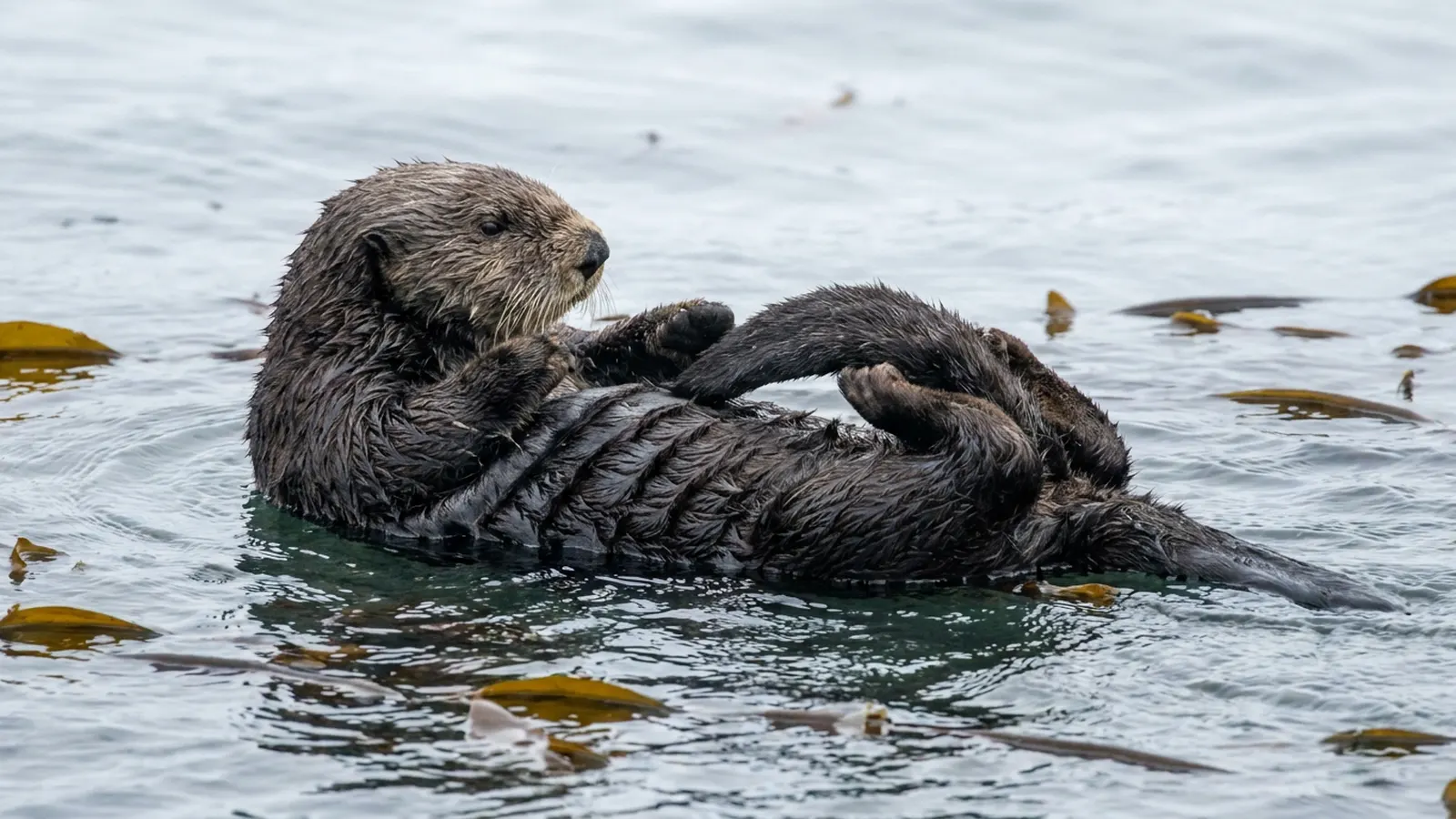
A sea otter can twist and bend its body so far that it can groom almost every part of its own back, helped by a flexible spine and loose skin.
Grooming is life or death for a sea otter. It has almost no blubber and depends on air trapped in its fur for insulation, so the fur must be clean everywhere. A flexible vertebral column lets the otter curl and roll; loose skin lets it pull fur from its back around to its front to comb with its paws. Watch a grooming otter and it looks almost boneless, folding itself into shapes no dog or cat could manage. Our page on sea otter adaptations explains why that matters.
The forelimbs help too. Like other mustelids, sea otters have no collarbone (clavicle). Without that strut linking the shoulder to the breastbone, the shoulders have a wider range of motion, letting the forepaws reach and scrub across the body.
The skull and teeth
The sea otter skull is broad and blunt, with powerful jaw muscles and flat, rounded cheek teeth designed to crush rather than cut.
Most carnivores have carnassials, blade-like cheek teeth that slice meat like scissors. Sea otters have replaced that cutting edge with broad, low-crowned molars and premolars with rounded cusps, a design shared with few other carnivores. They are perfect for crushing clams, mussels, snails, crabs and urchin tests. Sea otters have 32 teeth in total, and they are unusual among carnivores in having only four lower incisors instead of six. The lower incisors project forward slightly and are used to scoop flesh out of shells.
The skull also tells scientists about subspecies. The 1991 study that defined the three sea otter subspecies was based largely on skull measurements: Asian sea otters have the broadest skulls, southern sea otters the narrowest. See sea otter subspecies for the details.
| Part | Feature | Function |
|---|---|---|
| Skull | Broad, blunt, strong jaw attachments | Powerful crushing bite |
| Cheek teeth | Flat, rounded molars and premolars | Crush shells and urchins |
| Lower incisors | Four, slightly forward-pointing | Scoop flesh from shells |
| Spine | Highly flexible | Grooming, twisting, rolling |
| Shoulder | No collarbone | Wide reach for paws |
| Forelimbs | Short, with retractable claws | Handling food, grooming |
| Hind limbs | Long, flattened foot bones | Support webbed swimming feet |
| Tail | Short, flattened vertebrae | Steering and sculling |
Forelimbs: hands, not paddles
A sea otter’s forelimbs are short, and the paws are small and round with retractable claws. Unlike the front flippers of seals, they are not used much for swimming. Instead they act as hands: digging in sand, turning over rocks, holding prey against the chest, manipulating a stone tool and grooming. Inside, the bones of the paw are compact, supporting rough pads that grip slippery prey. That division of labour, hands in front and paddles behind, is one of the clearest skeletal signs of how a sea otter lives.
Hind limbs: built-in flippers
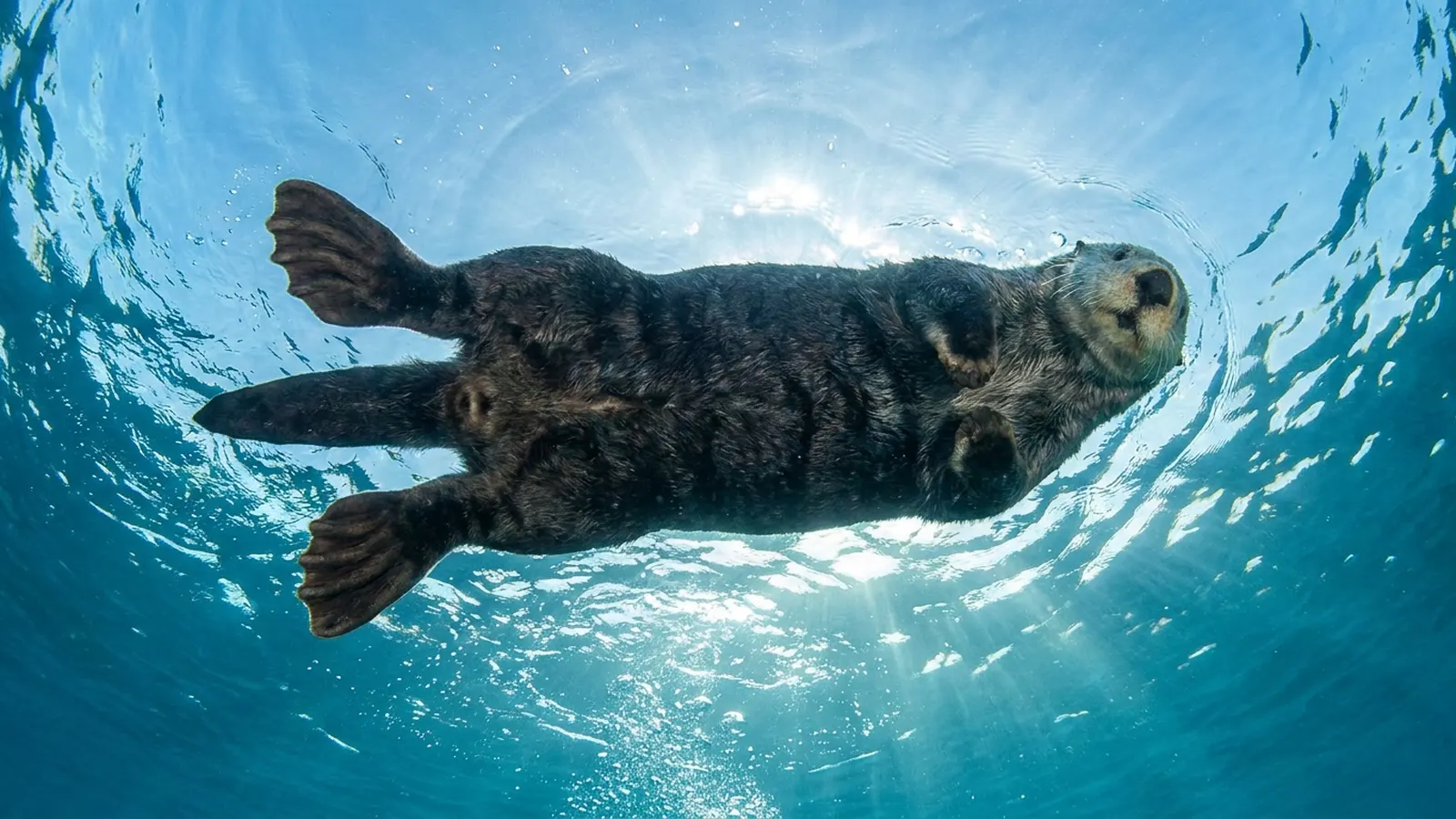
The hind feet are where the sea otter skeleton looks most marine. The foot bones are long and flattened, and the outer (fifth) toe is the longest, the reverse of most land mammals.
Those long digits support broad, fully webbed feet that look and work like flippers. Underwater, a sea otter swims by undulating its body and kicking both hind feet together. At the surface it usually swims on its back, sculling with its feet. On land, though, those same feet are a handicap. The hind limbs are short at the hip and knee but long in the foot, so a sea otter walks with a clumsy, humping gait. That is one reason sea otters spend almost their whole lives in the water; see can sea otters go on land?
Why sea otter bones can turn purple
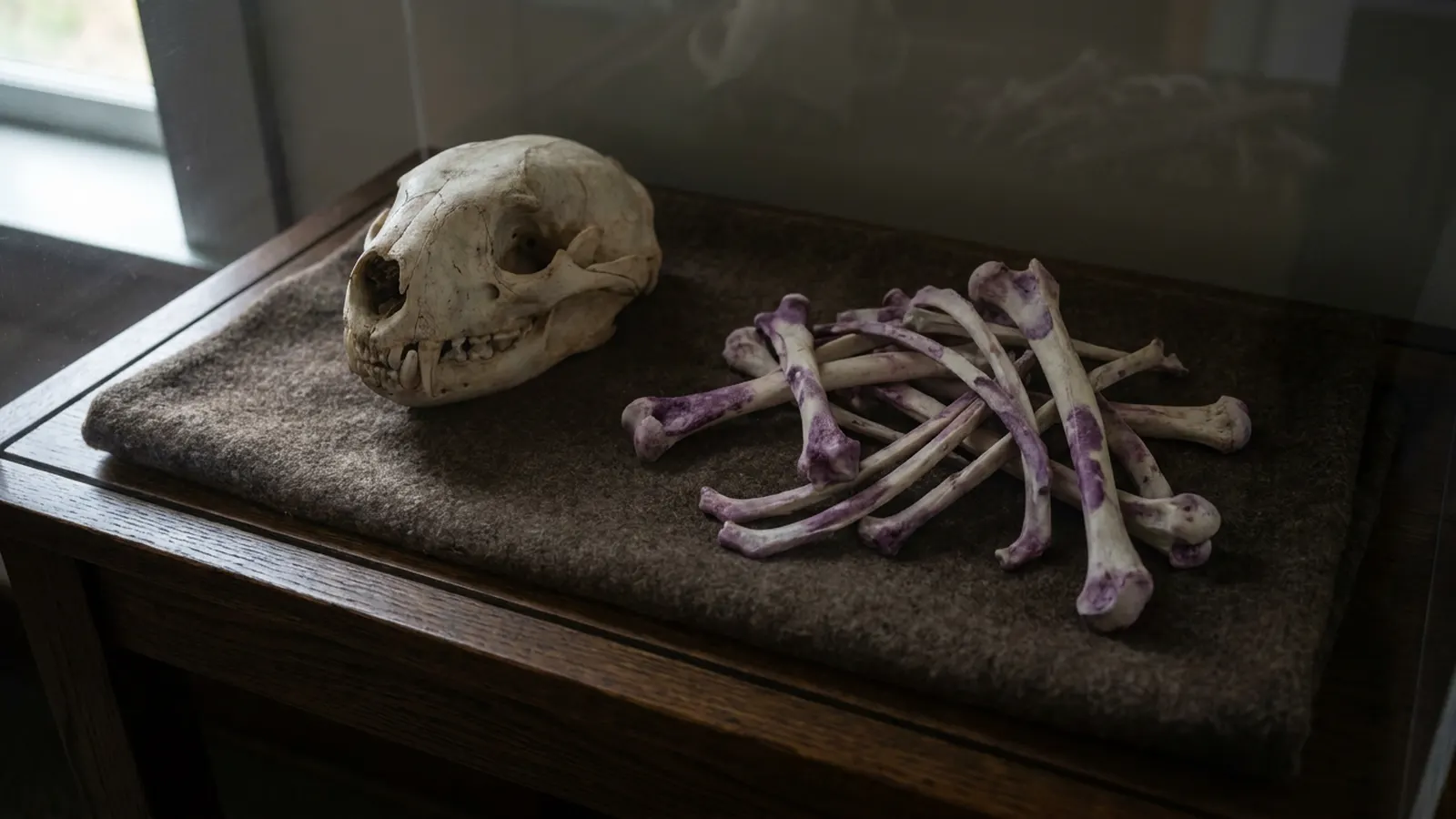
One of the oddest facts about sea otter skeletons is their colour. Sea urchins, especially purple urchins, contain pigments that can be deposited in the teeth and bones of animals that eat a lot of them. Sea otters that feed heavily on urchins can end up with purple-stained teeth and skeletons, a quirk noted by researchers handling otter remains. It is a vivid reminder of how closely otters are tied to urchins, and of their role in keeping urchin numbers down in kelp forests, covered in why sea otters are a keystone species.
What skeletons tell scientists
Sea otter bones are a rich source of information. Tooth wear and fractures show how hard an otter’s diet was and whether it used tools; a 2024 study in California linked tool use to less tooth damage. Growth layers in teeth help estimate age. Skulls separate subspecies. And bones from archaeological sites, where coastal peoples hunted sea otters for thousands of years, reveal where otters lived before the fur trade wiped them out, which helps biologists judge where reintroductions might work. Every stranded otter that reaches a lab adds to that record.
For anyone who keeps marine animals, there is a lesson in the teeth: the parts an animal cannot replace set the length of its life. A sea otter’s molars wear down year after year, and an otter that can no longer crush its food cannot keep up with its metabolism.
Sea otter skeleton vs seal skeleton
Seals and sea lions took a different road back to the sea, and their skeletons show it. In seals, all four limbs have become flippers: the bones of the arm and thigh are short and tucked inside the body, while the bones of the hands and feet are long and spread to support broad flippers. A seal’s skull has simple, pointed cheek teeth for grabbing slippery fish, and its body is wrapped in blubber rather than relying on fur. The sea otter is at an earlier stage of that journey. Only its hind feet have become flipper-like; its front limbs are still working hands, its skull is still recognisably a weasel’s, and it keeps warm with fur. The two groups evolved their marine features separately, but comparing them shows how many ways there are to rebuild a land mammal for the ocean.
That intermediate design is why sea otters are so tied to the coast. They lack the deep-diving physiology and blubber of seals, so they stay in shallow water close to shore, where their hands-in-front, flippers-behind skeleton works best.
Sea otter skeleton vs river otter skeleton
Side by side, a river otter skeleton is slimmer, with a much longer tail and narrower skull. Its cheek teeth are sharper, suited to a fish diet, and its hind feet are webbed but less flipper-like. The sea otter’s heavier bones, crushing molars and paddle feet reflect its diet of shellfish and its life entirely at sea. Our comparison of sea otters vs river otters covers the living animals.
How many teeth does a sea otter have?
Thirty-two, including flat, rounded molars for crushing shells and only four lower incisors.
Do sea otters have a collarbone?
No. Like other members of the weasel family, they lack a clavicle, which gives their forelimbs a wide range of motion.
Why are sea otter bones purple?
Pigments from sea urchins they eat can stain their teeth and bones purple.
Why are sea otters so flexible?
They have a flexible spine and loose skin, which let them reach every part of their fur when grooming.
Are sea otter feet webbed?
The hind feet are fully webbed and flipper-like, with the outer toe longest. The forepaws are small and not webbed in the same way.
How is a sea otter skeleton different from a river otter’s?
It is heavier, with a broader skull, crushing molars, a much shorter tail and more flipper-like hind feet.
- Kenyon, K.W. (1969). The Sea Otter in the Eastern Pacific Ocean. North American Fauna 68.
- Wilson, D.E. et al. (1991). Geographic variation in sea otters, Enhydra lutris. Journal of Mammalogy 72(1).
- Law, C.J. et al. (2024). Tool use increases mechanical foraging success and tooth health in southern sea otters. Science 384.
- Riedman, M.L. & Estes, J.A. (1990). The Sea Otter (Enhydra lutris): Behavior, Ecology, and Natural History. USFWS Biological Report 90(14).
Blane Perun has been exploring Earth’s oceans and marine life for over 25 years. Founder of TheSea.Org in 1999, underwater photographer, coral aquaculture pioneer, and explorer of 80+ countries.
About Blane Perun → More on sea otters →