Sea Cucumber — Do Sea Cucumbers Feel Pain?
Almost certainly not in any meaningful sense. Sea cucumbers have no brain, no central nervous system, and no nociceptors — the specialised pain-sensing receptors found in animals capable of experiencing pain. They have a simple diffuse nerve ring and radial nerves that coordinate basic movement and responses to touch, but the neural architecture required to process pain as a conscious experience simply does not exist in sea cucumbers.
The question of whether sea cucumbers feel pain connects to a broader question in marine biology: where is the boundary of sentience in the animal kingdom? For vertebrates — fish, mammals, reptiles — there is substantial evidence of pain perception and responses that go beyond simple reflexes. For invertebrates, the picture is far more complex and contested. Sea cucumbers sit near the bottom of the neurological complexity scale, sharing a phylum with sea stars and sea urchins but lacking even the modest neural complexity of an octopus or crab.
What is a sea cucumber?
An echinoderm stretched along the axis that runs from its mouth to its anus.
Sea cucumbers form the class Holothuroidea in the phylum Echinodermata, the same group as sea stars, brittle stars, sea urchins and feather stars. Like their relatives they are built on a five-part plan, but the body has been stretched out so that the animal lies on its side, with the mouth at one end and the anus at the other. Around 1,700 species have been described, from the shoreline to the deepest trenches. The smallest are about a centimetre long, while some snake-like species, such as Synapta maculata on Indo-Pacific reefs, can reach about 2 m when fully extended.
Instead of a rigid shell like a sea urchin, a sea cucumber has a leathery body wall in which the skeleton is reduced to microscopic chalky pieces called ossicles. Their shapes differ between species, so taxonomists often identify sea cucumbers by dissolving a scrap of skin and examining the ossicles under a microscope. The body wall is made of a remarkable material known as mutable collagenous tissue, which can switch from soft and floppy to stiff in seconds under nervous control. A sea cucumber can therefore wedge itself firmly into a crevice, or go almost limp to squeeze through a narrow gap.
Many species walk on rows of tube feet, which are part of the water vascular system that echinoderms use for movement and feeding. The tentacles around the mouth, usually 10 to 30 of them, are modified tube feet. Sea cucumbers breathe in an unusual way. Most have a pair of branched internal organs called respiratory trees, which they fill and empty by pumping water in and out through the anus. This opening is so important that some fish, the pearlfishes, use it as a shelter, living inside the body cavity or respiratory trees of large sea cucumbers.
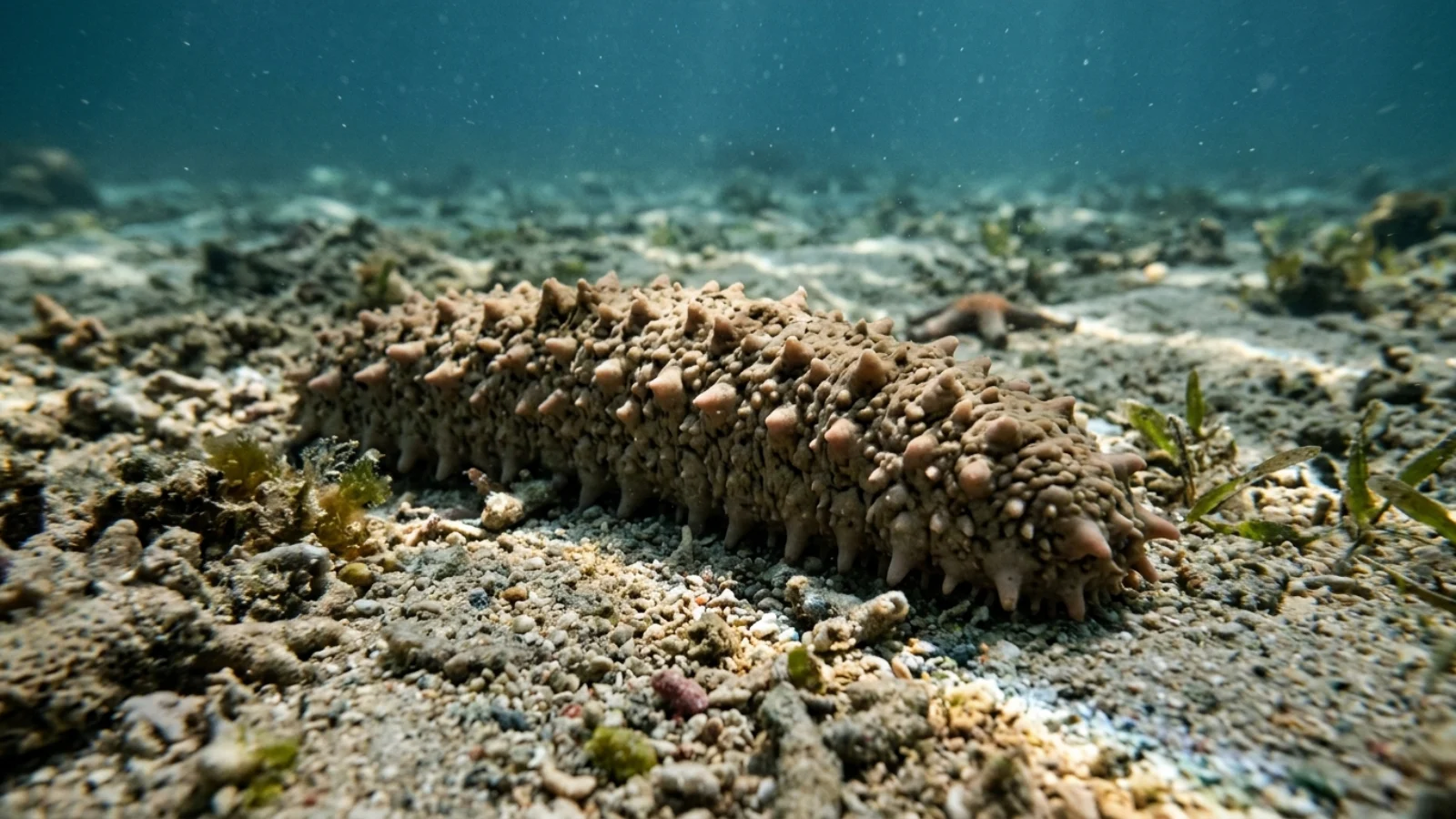
What kind of nervous system does a sea cucumber have?
A ring and five nerve cords, but nothing resembling a brain.
The sea cucumber nervous system consists of a nerve ring around the throat and five radial nerve cords that run along the length of the body, one beneath each band of tube feet, with a network of finer nerves in the skin. These nerves coordinate feeding, crawling, the stiffening of the body wall and responses to touch, light and chemicals. Some zoologists argue that the nerve ring and cords together act as a decentralised central nervous system, but there is no concentration of neurons that could be called a brain, and no structure comparable to the brains of octopuses, insects or vertebrates.
That matters for the pain question because most scientific definitions of pain involve more than detecting harm. Even very simple animals can detect damaging stimuli and pull away from them, a process called nociception. Pain in the full sense also involves the brain integrating those signals into an unpleasant experience that changes later behaviour, for example teaching an animal to avoid a place where it was hurt. Experiments of that kind have been carried out on crabs, octopuses and fish, but very little comparable work has been done on echinoderms, and their simple nervous system gives little reason to expect such abilities.
Why sea cucumbers almost certainly don’t feel pain
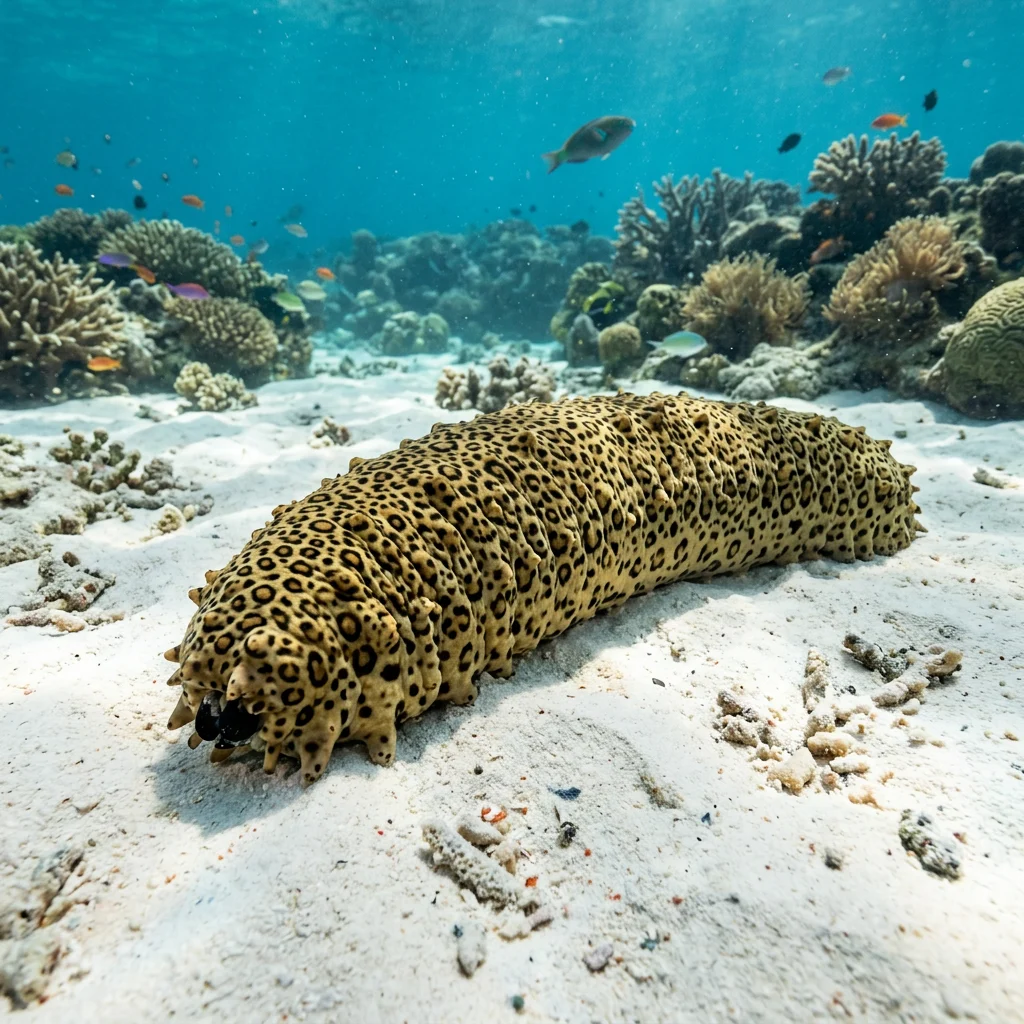
Pain as a biological function requires nociceptors to detect tissue damage, neural pathways to transmit signals, and a brain to process those signals into a conscious experience. Sea cucumbers have none of these components in a form that would support pain perception.
Nociception — the detection of potentially damaging stimuli — is distinct from pain, which requires conscious awareness. Sea cucumbers demonstrate withdrawal responses to strong stimuli, but this is a simple reflex mediated by their diffuse nerve network, not evidence of pain experience. The absence of a centralised brain is the critical factor: without a brain, there is no mechanism for the subjective, conscious experience of suffering that defines pain in the scientific sense. Even in species where nociceptors have been identified in invertebrates (crabs, lobsters), the debate about whether this constitutes pain in any meaningful sense is ongoing — for sea cucumbers, the question doesn’t even reach that stage.
How do scientists and lawmakers draw the line on animal sentience?
In 2021 a team led by Jonathan Birch at the London School of Economics reviewed the evidence for sentience in invertebrates for the UK government. They recommended that decapod crustaceans, such as crabs, lobsters and shrimp, and cephalopod molluscs, such as octopuses and squid, be recognised as sentient. The UK’s Animal Welfare (Sentience) Act of 2022 followed that recommendation. Echinoderms, including sea cucumbers, were not included, reflecting the lack of evidence that they have the kind of nervous system or behaviour associated with feeling pain.
That does not mean their treatment is irrelevant. Sea cucumbers are long-lived, slow to recover from overfishing and ecologically important, so there are strong reasons to handle them carefully even without evidence of suffering. Many divers and aquarists also follow a precautionary approach, avoiding squeezing or lifting sea cucumbers. Some species release toxins when stressed, which can harm fish in an aquarium or irritate human skin and eyes.
What is evisceration — and does it hurt?
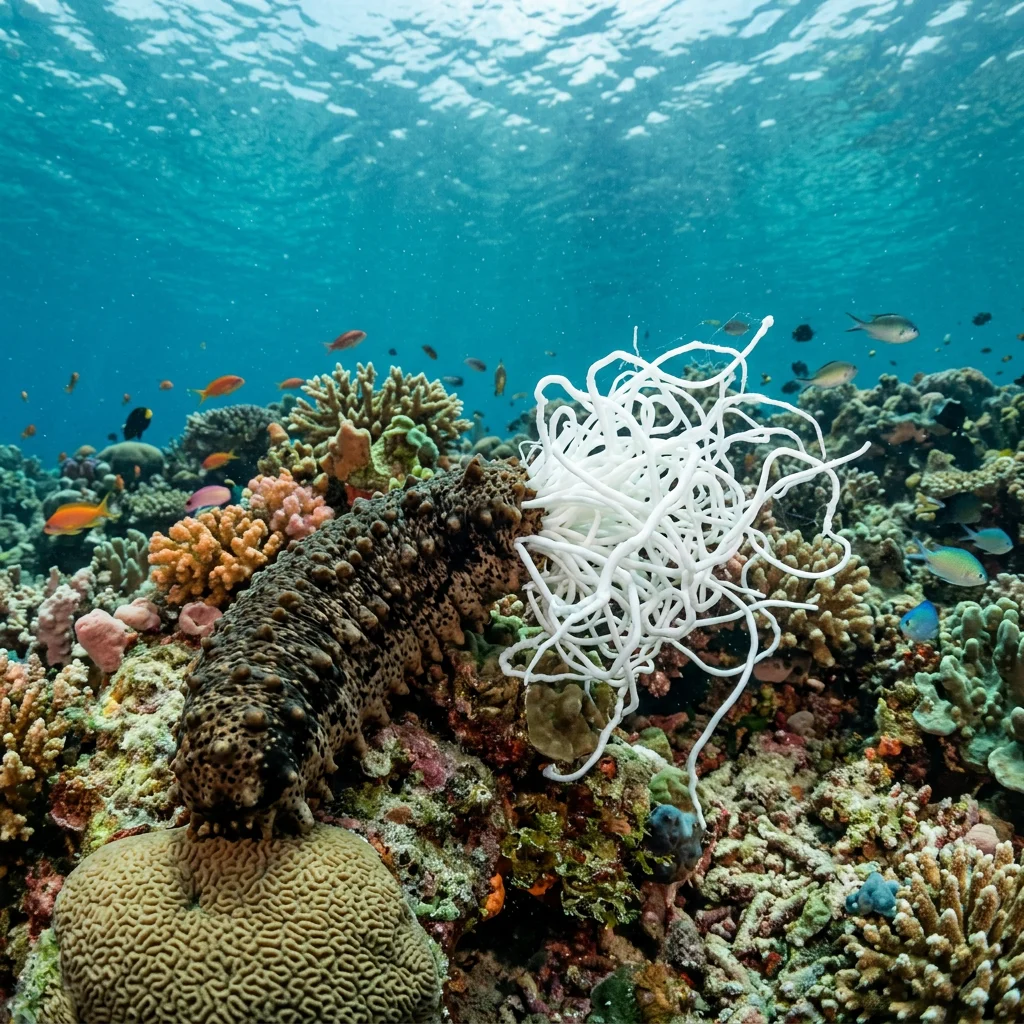
Sea cucumbers famously expel their internal organs when threatened — a defence called evisceration. The organs regenerate within weeks. This dramatic behaviour does not indicate pain.
When a sea cucumber is attacked or badly stressed, it can expel part of its gut, its respiratory trees and sometimes its gonads. In many species the organs leave through the anus, while in others the front end of the body ruptures and the organs come out there. The ejected tissue may entangle or distract a predator while the sea cucumber escapes. The process is driven by a rapid softening of specific connective tissues followed by strong muscle contractions, and it is best understood as an automatic defence reflex rather than as a reaction to pain.
Evisceration has a real cost. Without a gut, the animal cannot feed until it grows a new one. In a study of Holothuria parva from the Persian Gulf, regrowth began within about three days, a continuous intestine running from mouth to anus had formed after just over three weeks and was already holding food, and after about two months the new organs closely resembled the originals. That ability to rebuild whole organs makes sea cucumbers important animals for regeneration research.
How else do sea cucumbers defend themselves?
Toxins, sticky threads and a body that turns rock-hard.
Evisceration is the best-known defence but not the only one. Many sea cucumbers contain saponins, soapy chemicals in the body wall that are toxic to fish, and traditional fishers in parts of the Pacific once used crushed sea cucumbers to stun fish in rock pools. Some species of Holothuria, Bohadschia and their relatives have Cuvierian tubules, white threads attached near the respiratory trees that are shot out of the anus when the animal is disturbed. On contact with water the threads lengthen and become extremely sticky, entangling crabs and small fish, and the sea cucumber later regrows them.
Others rely on armour and concealment. Some species stiffen their body walls so that they cannot be pulled from crevices, while burrowing species hide in sand or mud during the day and emerge to feed at night. Many tropical species are coated with sand grains or have warty, cryptic skin that makes them hard to spot.
What do sea cucumbers actually do?
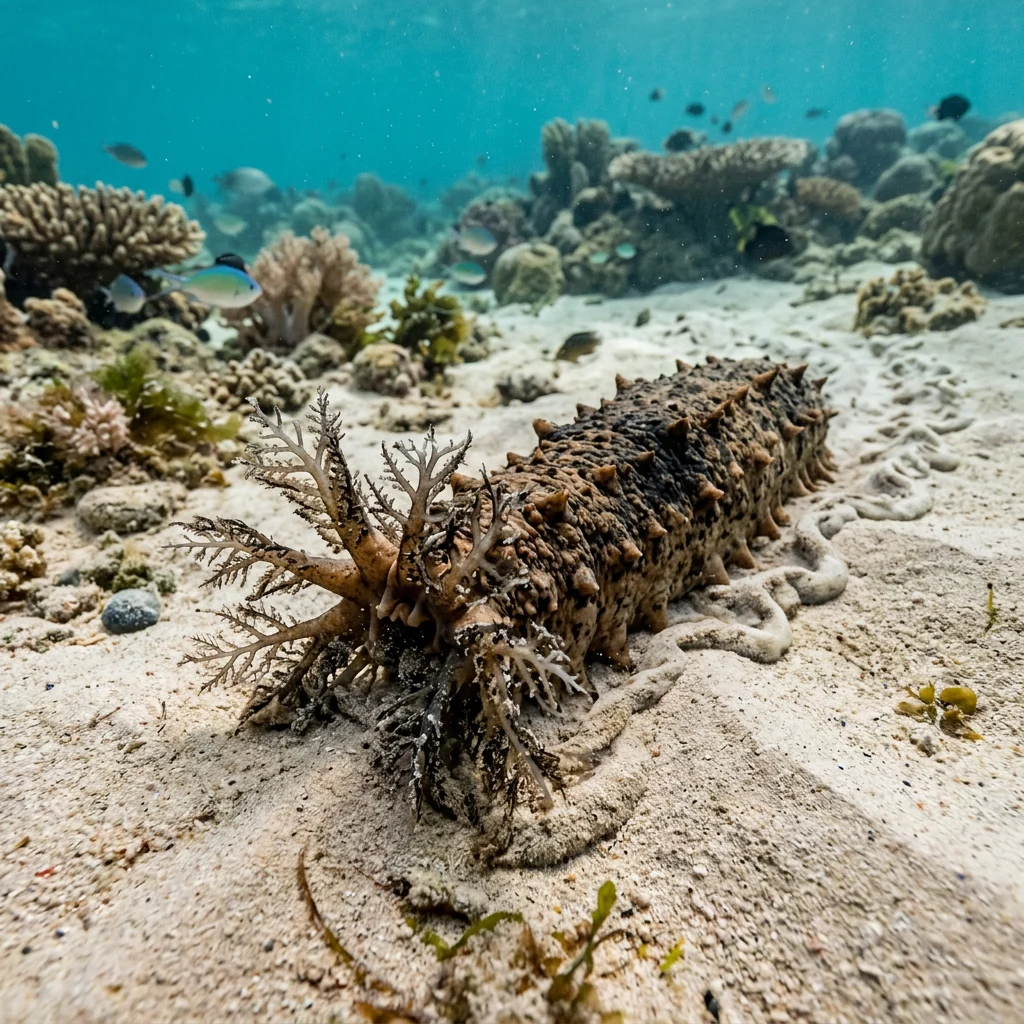
Sea cucumbers are among the most ecologically important animals on the seafloor — critical recyclers that process sediment and release locked nutrients back into the marine ecosystem.
Most familiar sea cucumbers are deposit feeders. They push sand and mud into their mouths with sticky oral tentacles, digest the bacteria, microalgae and decaying organic matter it contains, and leave behind neat strings or coils of cleaned sediment. Burrowing species turn over the upper layers of the seabed, carrying oxygen deeper into sediments where it would otherwise run out. The nutrients they release, such as ammonium and phosphate, can fertilise seagrass and the microscopic algae living on the sand surface.
On coral reefs their effect can be large. Kenneth Schneider, Maria Byrne and colleagues studied One Tree Reef on the southern Great Barrier Reef and reported in the Journal of Geophysical Research in 2011 that sea cucumbers dissolve part of the carbonate sand they swallow, because their digestion is acidic. They estimated that sea cucumbers accounted for roughly half of the reef’s night-time dissolution of calcium carbonate. That sounds harmful, but the dissolved carbonate also raises the water’s buffering capacity, which may help corals and other calcifying animals nearby cope with ocean acidification. Removing sea cucumbers from a reef therefore changes its chemistry as well as its sediment.
Not all sea cucumbers eat mud. Members of the order Dendrochirotida, which includes the colourful sea apples of the Indo-Pacific, are suspension feeders. They anchor themselves to rock or bury most of the body, then spread a crown of finely branched tentacles into the current to catch plankton and drifting particles. Each tentacle is pushed into the mouth in turn and wiped clean, a little like a child licking jam off its fingers. Suspension feeders tend to live where currents are strong, while deposit feeders dominate calm lagoons, seagrass beds and the deep seafloor.
Sea cucumbers are slow, but not static. Tagging studies on reefs show that many tropical species wander only a few metres a day and often follow daily rhythms, burying in the afternoon or hiding under ledges and emerging to feed at night. Because they move so little and live a long time, a reef’s sea cucumber population can take years to rebuild once the adults have been collected.
How do sea cucumbers reproduce?
Most sea cucumbers have separate sexes and reproduce by spawning. During a spawning event, individuals often raise the front of their bodies off the seabed and sway, releasing clouds of eggs or sperm from a single gonopore near the head. Fertilisation happens in open water, and the larvae drift in the plankton for days to weeks before settling as tiny juveniles. A few cold-water species brood their young on or inside the body. Some tropical species, such as the black sea cucumber Holothuria atra, can also reproduce asexually by pinching themselves in two, with each half regrowing the missing parts.
Why are sea cucumbers so important in the deep sea?
On the abyssal plains and in ocean trenches, sea cucumbers are often the most abundant large animals. They feed on the thin layer of organic material that drifts down from the surface and settles on the mud. Russian deep-sea biologist Georgy Belyaev called the deepest seafloor “the kingdom of Holothuroidea” after trawl studies found sea cucumbers in most catches below 6,000 m, and at depths below about 7,500 m they made up the large majority of animals by number and more than 90 percent of the catch by weight. Familiar deep-sea forms include the sea pig Scotoplanes, which walks on enlarged tube feet, and swimming species such as Enypniastes eximia, which can lift off the seabed and drift to new feeding grounds.
Why are sea cucumbers overfished?
A luxury food with slow-growing, easily collected sources.
Dried sea cucumber, called bêche-de-mer or trepang, has been traded in East and Southeast Asia for centuries. The animals are boiled, gutted and dried, and the rehydrated body wall is eaten in soups and stews and used in traditional medicine. Because large tropical sea cucumbers live in shallow water, move slowly and cannot flee, they are easy to collect by hand, and fisheries have spread to more than 70 countries. Dried tropical species sell for roughly US$10 to US$600 per kilogram in Hong Kong and mainland China, and dried Japanese sea cucumber from cold northern waters can fetch up to about US$3,000 per kilogram.
An IUCN Red List assessment of 377 species in the main commercial order found 16 threatened species. Steven Purcell, Beth Polidoro and colleagues reported in Proceedings of the Royal Society B in 2014 that the most valuable species were the most likely to be at risk. The black teatfish (Holothuria whitmaei) was listed as Endangered and the white teatfish (H. fuscogilva) as Vulnerable after declines of about 60 to 80 percent across large parts of their ranges. Teatfish species are now listed on Appendix II of CITES, which requires international trade to be shown to be sustainable. Recovery is slow. Some overfished populations have shown little or no recovery decades after harvesting stopped, partly because the animals need to be close together to spawn successfully.
Do sea cucumbers feel pain?
Almost certainly not. Sea cucumbers have no brain, no central nervous system, and no identified nociceptors (pain receptors). Their simple diffuse nerve network coordinates reflexes and basic movements but lacks the architecture required for conscious pain perception. They respond to harmful stimuli but this is reflexive, not painful.
Do sea urchins feel pain?
Almost certainly not in any conscious sense. Sea urchins are in the same phylum (Echinodermata) as sea cucumbers and have a similarly simple nervous system with no brain. They show protective responses to tissue damage but no scientific evidence supports the conclusion that this constitutes conscious pain experience.
What is evisceration in sea cucumbers?
Evisceration is a defence mechanism where sea cucumbers expel their internal organs — respiratory trees, digestive system, sometimes gonads — through their body wall or mouth when threatened. The expelled organs may distract predators. A new gut can form within a few weeks. It is a defence reflex, not a pain response.
What do sea cucumbers eat?
Sea cucumbers are detritivores and deposit feeders — they ingest sediment and extract organic matter, bacteria, and decomposing material from it. They play a critical ecological role as seafloor recyclers, processing sediment, aerating the substrate, and releasing nutrients into the water column.
How many species of sea cucumber are there?
Approximately 1,700 described species in the class Holothuroidea, found in every ocean from intertidal zones to the deep sea. They range from about a centimetre to roughly 2 metres in length. Some deep-sea species, such as the sea pig Scotoplanes, walk across the abyssal floor in large groups.
Are sea cucumbers endangered?
Many species are. Sea cucumbers are heavily harvested for food (bêche-de-mer/trepang) across the Indo-Pacific, and overfishing has critically depleted populations of high-value species like the prickly redfish and sandfish. Fisheries operate in more than 70 countries, and 16 of 377 species assessed by the IUCN were listed as threatened.
- Schneider, K. et al. (2011). Potential influence of sea cucumbers on coral reef CaCO3 budget: a case study at One Tree Reef. Journal of Geophysical Research 116: G04032. doi:10.1029/2011JG001755
- Purcell, S.W., Polidoro, B.A., Hamel, J.-F., Gamboa, R.U. & Mercier, A. (2014). The cost of being valuable: predictors of extinction risk in marine invertebrates exploited as luxury seafoods. Proc. R. Soc. B 281: 20133296. doi:10.1098/rspb.2013.3296
- Jamieson, A.J. et al. (2011). Hadal holothurians and deep-sea megafauna, citing Belyaev (1989). Marine Biology 158: 2695–2703.
- Birch, J. et al. (2021). Review of the Evidence of Sentience in Cephalopod Molluscs and Decapod Crustaceans. London School of Economics for DEFRA.
- Oceanbites (2021). Summary of Holothuria parva evisceration and gut regeneration study.
- Royal Zoological Society of NSW. Submission on teatfish status (IUCN 2013 listings; CITES Appendix II).
Blane Perun has been exploring Earth’s oceans and marine life for over 25 years. Founder of TheSea.Org in 1999, underwater photographer, coral aquaculture pioneer, and explorer of 80+ countries.
About Blane Perun →