Sea Cow vs Manatee — The Nickname, and the Extinct 10-Tonne Giant
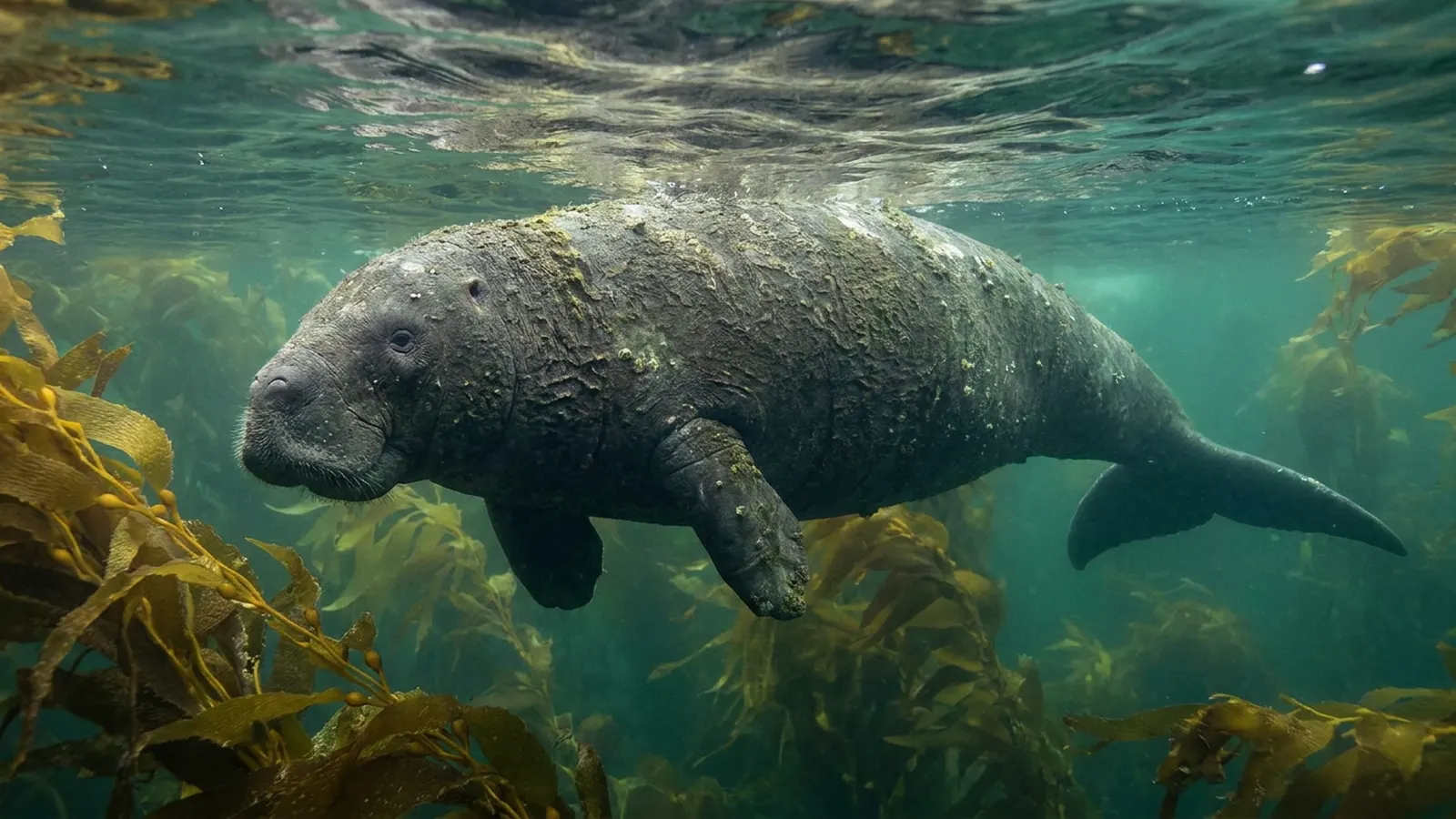
“Sea cow” is two different things. Most of the time today, it’s just a nickname for manatees and dugongs — the casual common name for any large slow grazing marine mammal in the order Sirenia. In that sense, every manatee is a sea cow. But the name also refers to a specific extinct animal: Steller’s sea cow (Hydrodamalis gigas), a 10-tonne, 8–10 m sirenian that lived in the Bering Sea and was hunted to extinction in 1768, just 27 years after Europeans first discovered it. So “sea cow vs manatee” resolves two ways: if you mean the nickname, the manatee is a sea cow. If you mean Steller’s sea cow, the differences are enormous — size, range, habitat, food, anatomy, and the small problem that one is alive and the other has been extinct for 250 years.
The phrase “sea cow” gets used three ways and people confuse them. Sometimes “sea cow” is just slang for any manatee or dugong, the way someone might call a cat a kitty. Sometimes it’s a more specific reference to manatees as a group. And sometimes — in any scientific or historical context — it means Steller’s sea cow, a particular extinct species that bore the name formally and whose extinction in 1768 is one of the saddest stories in marine biology. The right answer to “sea cow vs manatee” depends on which sea cow you mean.
“Sea cow” as a nickname — the manatee meaning
In everyday English usage, especially among Floridians and Caribbean residents, “sea cow” just means manatee. The nickname is centuries old and reflects the animal’s grass-grazing behaviour, its bulk, and its slow placid temperament.
The Spanish colonists who arrived in the Caribbean after Columbus called the local manatees vaca marina — literally “sea cow” — because the animals grazed on seagrass meadows the way cows graze on pastures. The name stuck. English-language usage adopted the calque “sea cow” for both the West Indian manatee and the West African manatee, and the term has been used informally for manatees and dugongs ever since. The order name Sirenia is the formal scientific term; “sea cow” is the vernacular.
So if someone in Florida asks you whether you’ve seen a sea cow, they mean a manatee. If a Caribbean fisherman talks about sea cows, they mean manatees. If you read a children’s book about sea cows, it’s almost certainly about manatees. In all of these uses, the answer to “is a sea cow a manatee?” is simply yes — the manatee is the sea cow being referred to.
Steller’s sea cow — the species the name formally belongs to
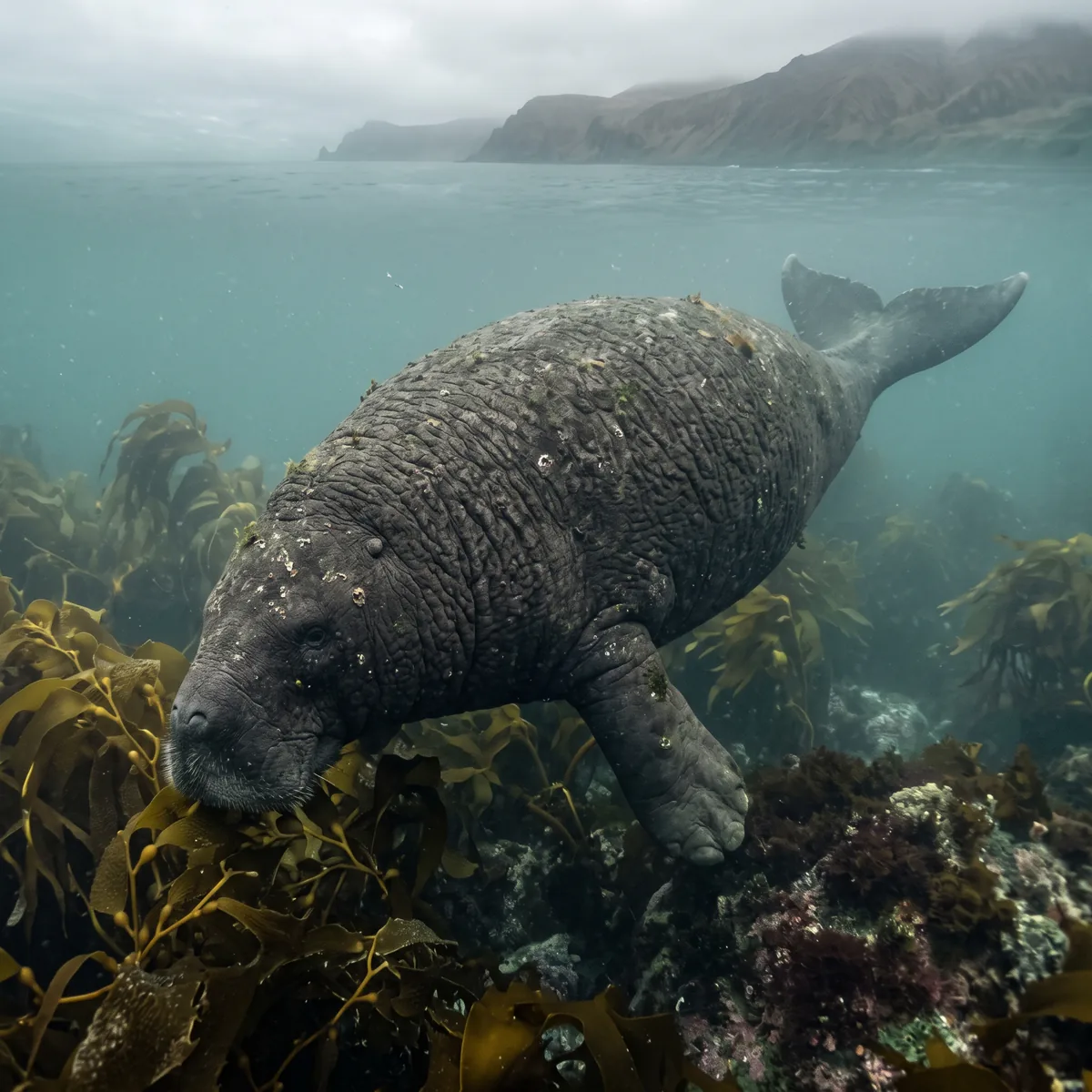
The formal scientific use of “sea cow” refers to a single species: Hydrodamalis gigas, named for the German naturalist Georg Wilhelm Steller, who described it in 1741. It is the largest sirenian that ever lived in historical times, and it has been extinct since 1768.
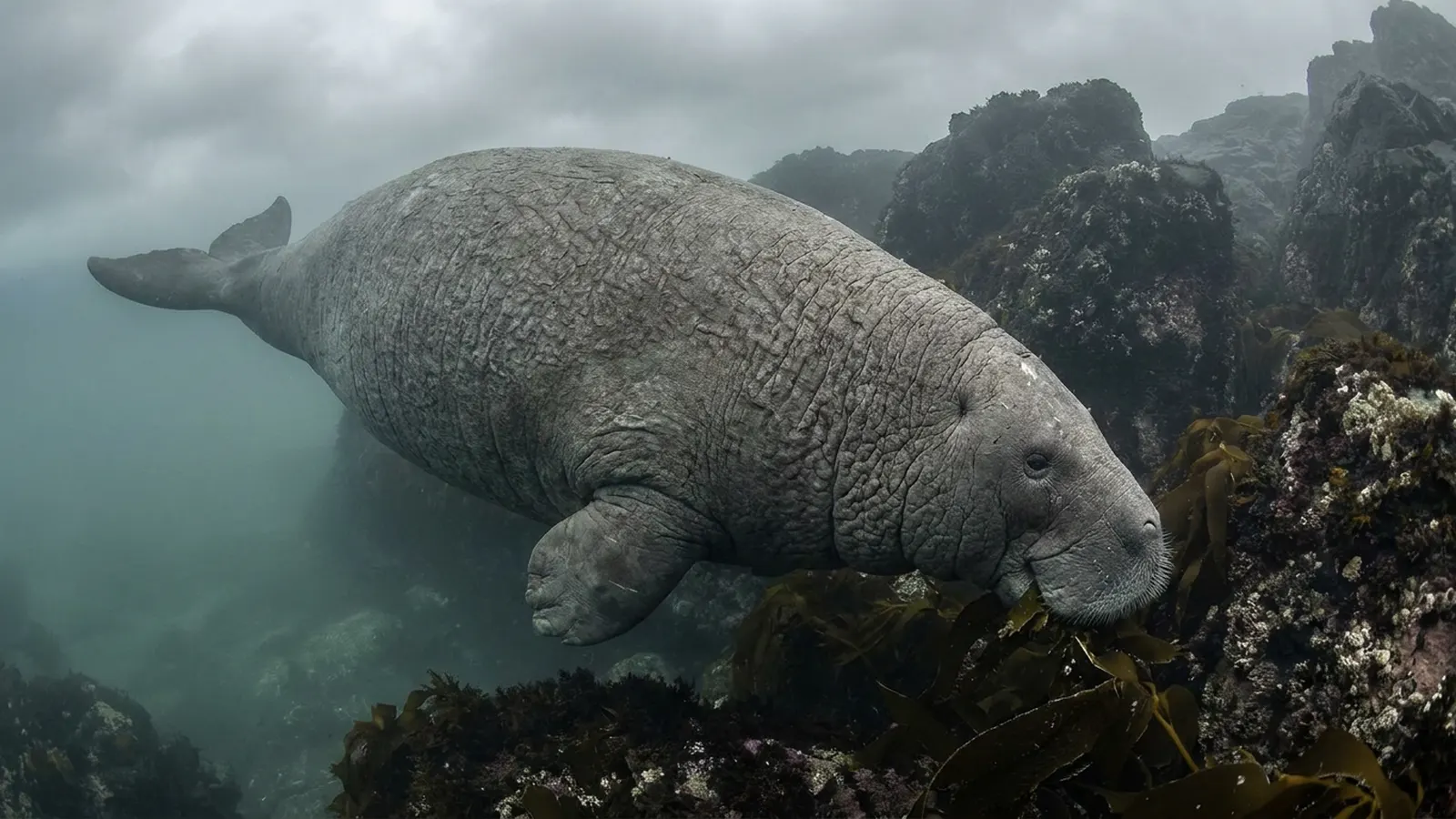
Steller’s sea cow lived in the cold shallow coastal waters of the Bering Sea, particularly around the Commander Islands between the Russian Far East and Alaska. Adult Steller’s sea cows reached 8 to 10 metres in length and up to 10 tonnes in weight — roughly the size and weight of a small whale, and many times the size of any living manatee. The species had adapted to cold water with thick blubber and a thick, bark-like skin, and fed almost exclusively on kelp in the shallow coastal kelp forests of the Bering Sea.
The species was described in 1741 by Georg Steller, the German naturalist who travelled on the Bering Expedition and was shipwrecked on what is now Bering Island. Steller observed the animals at close range during his enforced stay there and wrote the first scientific description. The species was extinct by 1768 — just 27 years after Steller’s description. Russian fur traders and explorers, returning regularly to the Commander Islands for sea otter pelts, hunted the slow defenceless sea cows for meat. The species had a small geographic range, a small population (probably under 2,000 animals at discovery), and no defence against organised human hunting. By the time the species was extinct, almost nobody outside the immediate region had ever seen one alive.
How Steller’s sea cow differed from a manatee
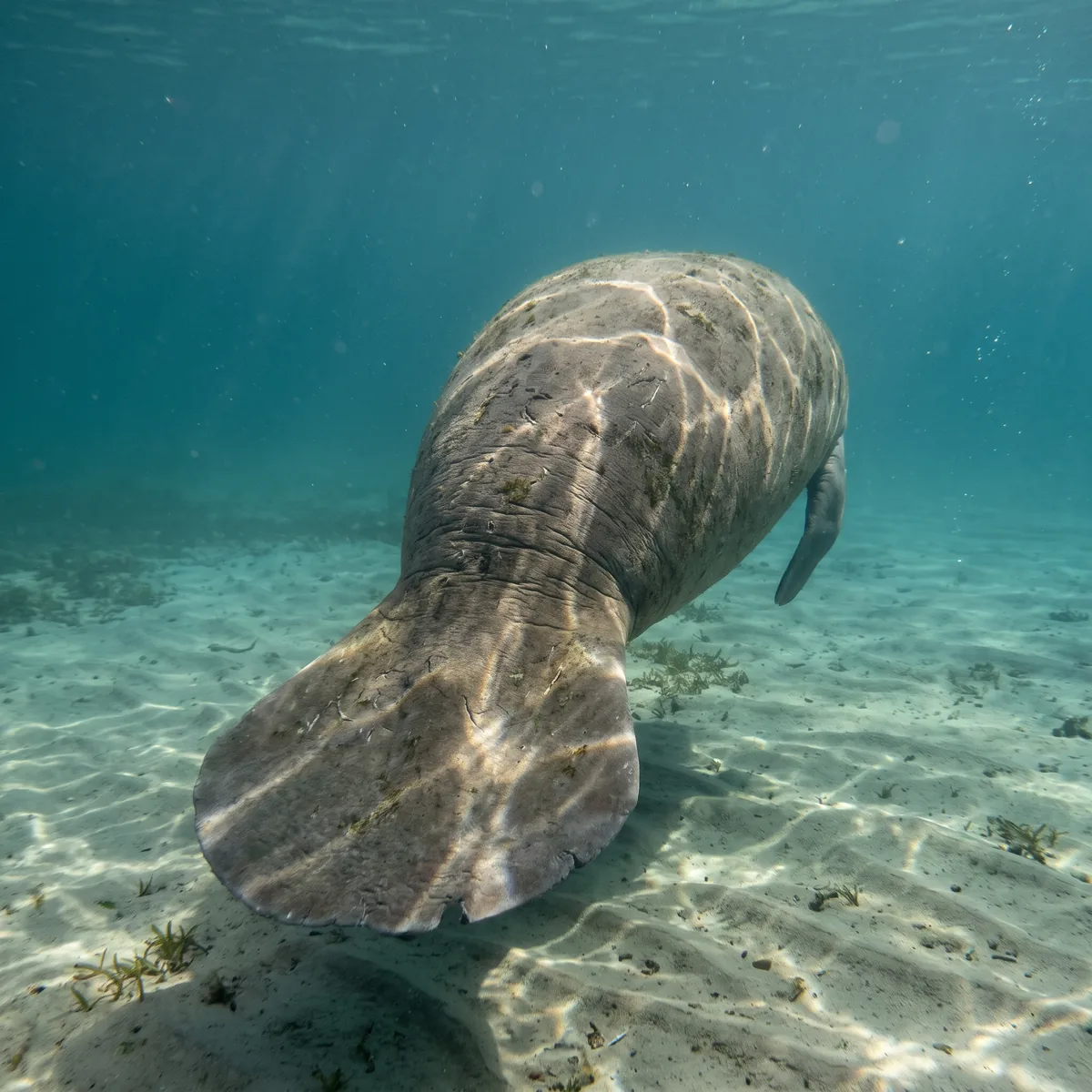
Beyond the size difference, Steller’s sea cow and the modern manatee differed in almost every aspect of biology — habitat, food, anatomy, social structure, and ecology.
Size. Steller’s sea cow was 8–10 m and 10 tonnes; the West Indian manatee is 3–4 m and 400–600 kg. The size difference is roughly an order of magnitude. Adult Steller’s sea cows weighed more than twenty adult manatees combined.
Habitat. Steller’s lived in the cold subarctic Bering Sea, in water averaging around 4°C. Modern manatees cannot survive below 20°C. The sea cow had extensive blubber, thick insulating skin, and was thermally suited to cold water; manatees are tropical and subtropical animals that require constant access to warmth.
Diet. Steller’s sea cow fed on kelp — the giant brown algae of cold coastal seas. Manatees feed on seagrass (in salt water) and freshwater plants (in rivers and springs). The two food sources are completely different, found in different habitats, and require different feeding behaviours.
Teeth. Manatees have the marching-molar system — continuous tooth replacement throughout life. Steller’s sea cow had no teeth at all. Instead it had thick horny plates in the front of its upper and lower jaws — like a turtle’s beak — used to grasp and crush kelp. The tooth differences reflect the entirely different feeding mechanics: marching molars for abrasive seagrass, horny plates for kelp.
Tail. Manatees have a single rounded paddle tail. Steller’s sea cow had a horizontally forked tail — the same general shape as a whale’s fluke. This was an adaptation for sustained swimming in open coastal water rather than slow manoeuvring in shallow vegetation.
Forelimbs. Steller’s sea cow had short stumpy forelimbs that the species apparently used to push itself along the bottom in shallow water. Modern manatees have flexible flippers that can grasp food and steer.
The Steller’s sea cow extinction — what happened
The extinction of Steller’s sea cow is one of the cleanest cases of human-driven extinction in the historical record. The species disappeared within a generation of European discovery, in a remote location, due to organised hunting pressure on a small isolated population.
The Bering Expedition under Vitus Bering reached the Commander Islands in 1741. Bering himself died there. Steller, the expedition’s naturalist, observed the local sea cows during the months the survivors spent stranded on the island. He wrote a detailed description of their behaviour, biology, social structure, and feeding habits — one of the most thorough natural-history accounts ever produced of a species that was about to go extinct. Steller noted that the animals were exceptionally easy to kill — slow-moving, surface-feeding, defenceless, and emotionally distressed when other members of the herd were attacked. Members of injured sea cows would gather around the wounded animal trying to help, making the entire group easy to hunt sequentially.
After the Bering Expedition’s survivors returned to Russia in 1742, news of the rich fur-bearing resources of the Commander Islands attracted Russian fur traders. The hunters were after sea otter pelts, but they relied on Steller’s sea cow meat to feed their hunting parties. Each fur-trading expedition killed dozens of sea cows for provisions. With a small initial population (probably fewer than 2,000 animals) and slow reproduction, the species could not sustain the pressure. The last documented Steller’s sea cow was killed in 1768. Subsequent expeditions found none.
The species had been described, sketched, and observed by exactly one trained naturalist (Steller) before its extinction. Almost everything we know about its biology comes from Steller’s journals. Several skeletons survive in museums, assembled from bones recovered on Bering Island. No complete specimen exists; no photograph was ever taken; the species disappeared a century before the era of natural-history photography.
Are manatees and Steller’s sea cow related?
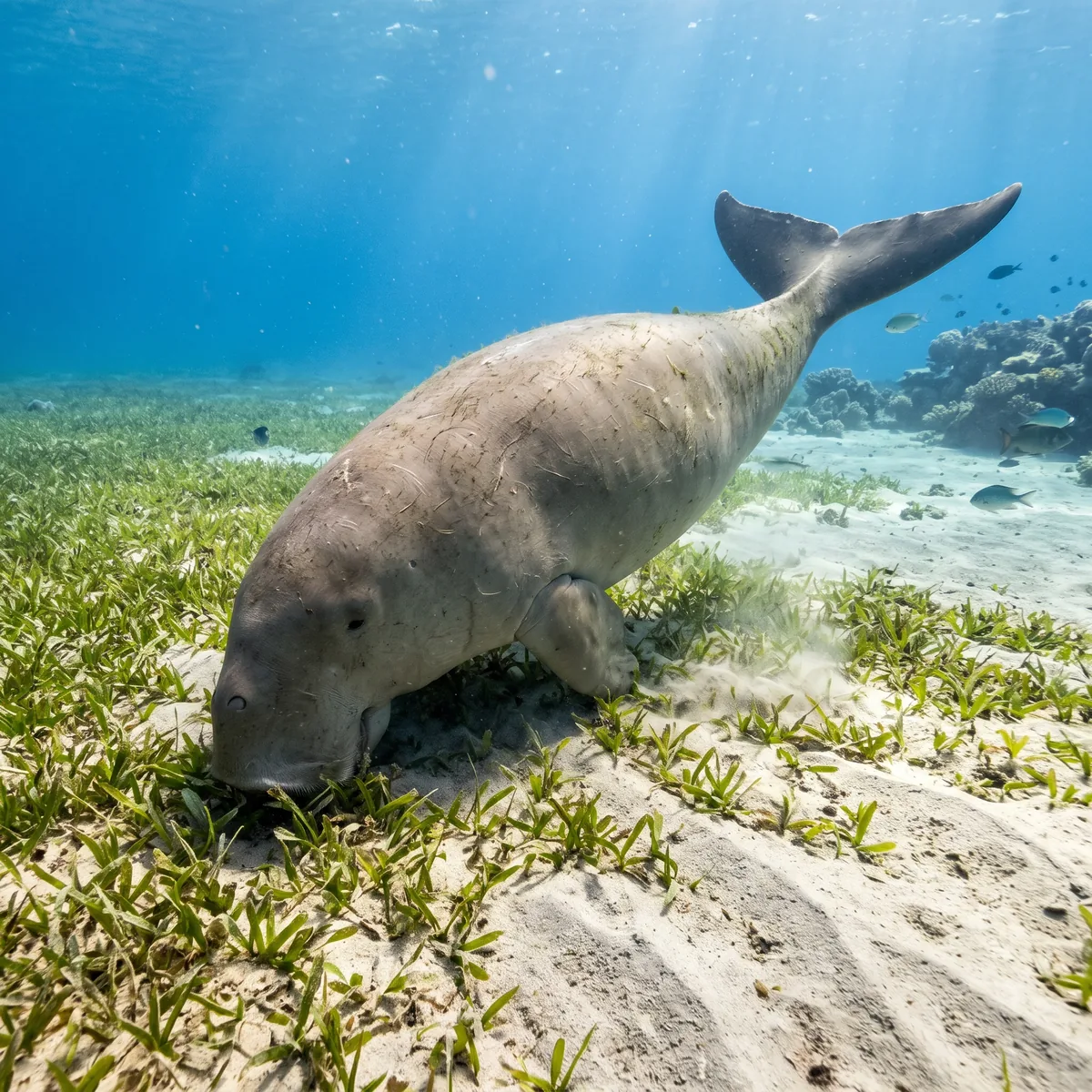
Yes — both belong to the order Sirenia and share a common ancestor that lived around 50 million years ago. But within Sirenia, Steller’s sea cow was more closely related to dugongs than to manatees.
The order Sirenia contains all extant and extinct manatees, dugongs, and sea cows. Within Sirenia, two main families survive into recent geological time: Trichechidae (manatees — West Indian, Amazonian, West African) and Dugongidae (dugongs and Steller’s sea cow). The two families diverged around 50 million years ago. Steller’s sea cow was an extreme cold-adapted member of family Dugongidae — closely related to the modern dugong, distantly related to the manatees. The shared ancestor of manatees and Steller’s sea cow lived in warm shallow seas around the time of the K-Pg extinction recovery, and the two lineages then diverged into entirely different ecological niches.
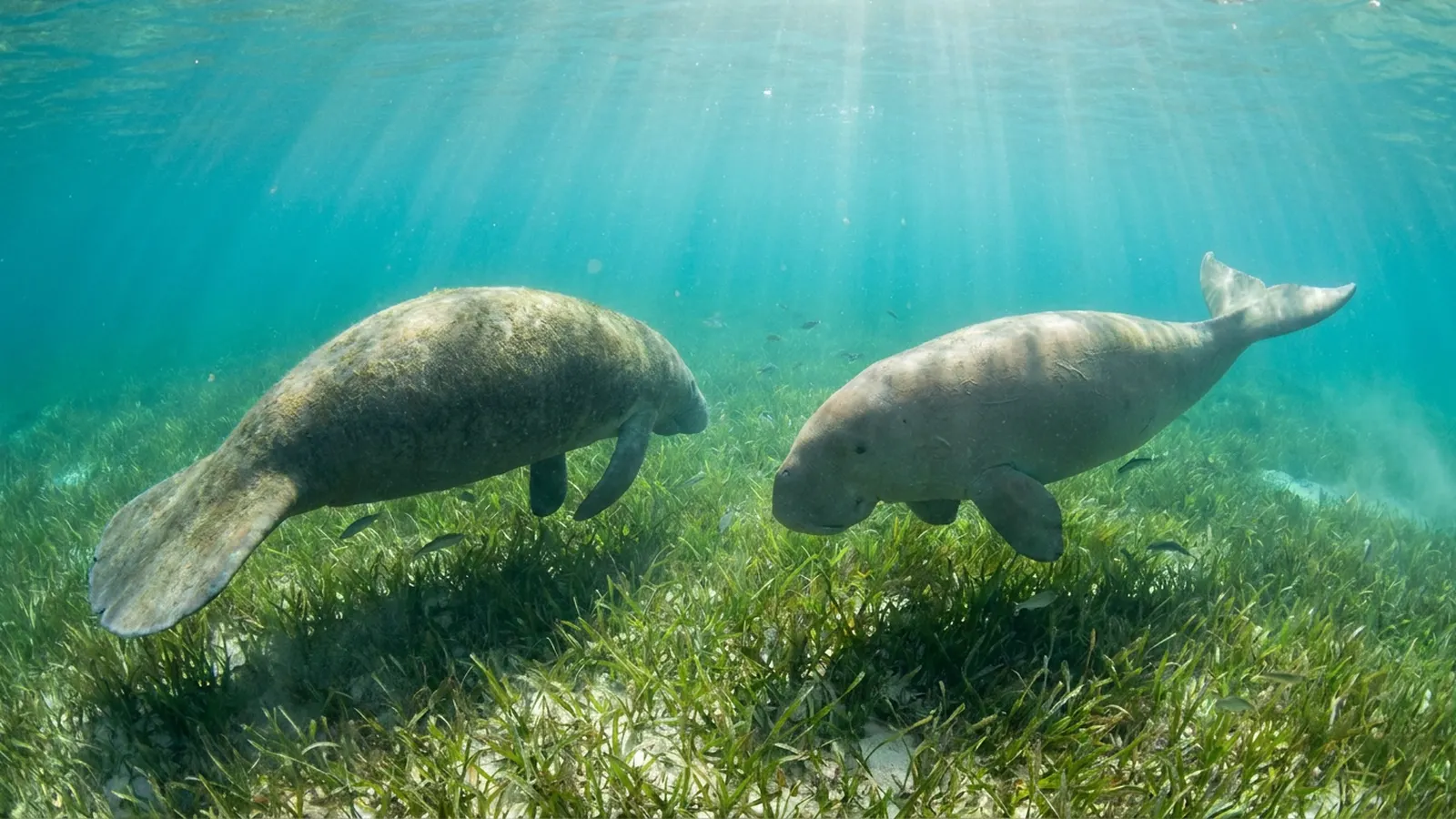
This means the modern manatee’s closest living relative (in the sense of remaining living sirenians) is actually the dugong, not the extinct sea cow. But the extinct Steller’s sea cow was closer to the dugong than the dugong is to the manatee. The phylogenetic tree puts manatees on one branch, dugong + Steller’s sea cow on the other.
Is a sea cow the same as a manatee?
It depends on the context. In casual modern usage, “sea cow” usually means “manatee” — the nickname is centuries old and reflects the manatee’s grass-grazing behaviour and bulk. In a scientific or historical context, “sea cow” usually means Steller’s sea cow (Hydrodamalis gigas), a specific extinct species that was a separate animal from any modern manatee. Both meanings are correct English usage.
What was Steller’s sea cow?
A massive (8–10 m, up to 10 tonnes) sirenian that lived in the cold Bering Sea, especially around the Commander Islands. It fed on kelp, had no teeth (only horny mouth plates), and lacked the warm-water requirements of modern sirenians. The species was discovered by Europeans in 1741 and hunted to extinction by 1768 — just 27 years.
Is Steller’s sea cow extinct?
Yes. The species was hunted to extinction in 1768, less than three decades after Europeans first described it. The last documented animal was killed by Russian fur traders working the Commander Islands. The species is one of the cleanest examples of human-driven extinction in the historical record.
How big was Steller’s sea cow compared to a manatee?
Steller’s sea cow was 8–10 metres long and up to 10 tonnes. A modern West Indian manatee is 3–4 metres and 400–600 kilograms. The sea cow was roughly the size of a small whale — an order of magnitude larger than any living manatee.
Are manatees related to Steller’s sea cow?
Yes — both belong to the order Sirenia. But within Sirenia, Steller’s sea cow was a member of family Dugongidae, closely related to the modern dugong, while manatees are in family Trichechidae. The two families diverged around 50 million years ago. So the dugong is the manatee’s closest living relative; Steller’s sea cow was the dugong’s extinct cold-water cousin.
Why is a manatee called a sea cow?
Because it grazes on aquatic vegetation — particularly seagrass meadows — the way a cow grazes on a pasture. The Spanish term vaca marina (“sea cow”) was applied to West Indian manatees by Spanish colonists in the Caribbean after Columbus, and the English calque “sea cow” came into use shortly thereafter. The animal’s bulk, slow movements, and placid temperament reinforced the cow-like image.
Are there any sea cows alive today?
If “sea cow” means manatee, yes — the West Indian, Amazonian, and West African manatees are all alive (though Vulnerable or Endangered). If “sea cow” specifically means Steller’s sea cow, no — that species has been extinct since 1768. If “sea cow” includes dugongs, then yes — the modern dugong (Dugong dugon) still lives in the Indo-Pacific in reduced numbers.
What did Steller’s sea cow eat?
Kelp. The species was a kelp-forest specialist, feeding on the giant brown algae of the cold coastal Bering Sea. It had no teeth, but used thick horny plates in the front of its jaws — like a turtle’s beak — to grasp and crush the kelp. This is completely different from the seagrass and freshwater plant diet of modern manatees, and required completely different jaw anatomy.
Why did Steller’s sea cow go extinct so quickly?
Small initial population, restricted geographic range, slow reproduction, and intense hunting pressure from Russian fur traders who used sea cow meat to feed their hunting expeditions for sea otter pelts. The combination was lethal — the species had probably fewer than 2,000 individuals at discovery, lived only around the Commander Islands, and reproduced as slowly as modern sirenians. Within 27 years of discovery the species was gone.
Is the sea cow the same as a dugong?
In some usages, yes — particularly in Australia, “sea cow” sometimes means dugong. The dugong (Dugong dugon) is a living sirenian in the Indo-Pacific, the surviving member of family Dugongidae, and the closest living relative of the extinct Steller’s sea cow. Dugongs differ from manatees in tail shape (forked vs paddle), habitat (strictly marine vs both salt and fresh water), and several other features.
Blane Perun has been exploring Earth’s oceans and marine life for over 25 years. Founder of TheSea.Org in 1999, underwater photographer, coral aquaculture pioneer, and explorer of 80+ countries.
About Blane Perun →