Pirate Ship Names — Real Pirate Ships, Their Captains and Their Fates
Golden Age pirate ship names were chosen for psychological effect, political statement, and personal expression — not random. Queen Anne’s Revenge referenced the War of the Spanish Succession and Blackbeard’s sense of historical identity. Royal Fortune announced Bartholomew Roberts’ ambition. Whydah preserved the ship’s African origins as a slave vessel. Pirates frequently renamed captured vessels, and the name chosen said something specific about the captain’s aspirations, grievances, or personality. The names were a form of branding in a world where reputation was a tactical asset.
Pirate ship names operated in a specific functional context that distinguishes them from the names of ordinary merchant or naval vessels. A pirate ship’s name was part of its captain’s public identity — it circulated through port networks and newspaper accounts, preceded the vessel to its next target, and contributed to the reputation that was the pirate’s most effective weapon. Choosing a name was a strategic act as much as a personal one.
What were the names of real pirate ships?
Here are 27 documented pirate ships of the 17th and 18th centuries, with their captains, years and what became of them. Several famous names, Revenge, Ranger, Fancy and Adventure, turn up more than once.
| Ship | Captain | Years | Fate |
|---|---|---|---|
| Queen Anne’s Revenge | Blackbeard (Edward Teach) | 1717–1718 | Ran aground at Beaufort Inlet, North Carolina, June 1718; wreck found 1996 |
| Adventure | Blackbeard | 1718 | Blackbeard killed aboard her by Lt. Robert Maynard at Ocracoke, 22 November 1718 |
| Revenge | Stede Bonnet | 1717–1718 | Sailed with Blackbeard; renamed Royal James |
| Royal James | Stede Bonnet | 1718 | Captured in the Cape Fear River, September 1718; Bonnet hanged in Charleston |
| Whydah Gally | Samuel Bellamy | 1717 | Wrecked off Cape Cod in a storm, April 1717; wreck found 1984 |
| Mary Anne | Samuel Bellamy’s prize crew | 1717 | Wrecked in the same storm; survivors tried and hanged in Boston |
| Fancy | Henry Every | 1694–1696 | Took the Mughal treasure ship Ganj-i-Sawai, 1695; disposed of in the Bahamas, 1696 |
| Adventure Galley | William Kidd | 1696–1698 | Leaking; stripped and burned at Île Sainte-Marie, Madagascar, 1698 |
| Quedagh Merchant (Adventure Prize) | William Kidd | 1698–1699 | Abandoned and burned off Hispaniola, 1699; wreck identified 2007 off Catalina Island |
| Royal Fortune | Bartholomew Roberts | 1720–1722 | Several ships bore the name; the last was taken by HMS Swallow off Cape Lopez, 1722, and Roberts was killed |
| Great Ranger | Bartholomew Roberts’s consort | 1721–1722 | Captured by HMS Swallow, February 1722 |
| Royal Rover | Bartholomew Roberts | 1719 | Stolen by Walter Kennedy and his crew while Roberts chased a prize |
| Rover | Howell Davis | 1719 | Davis killed in an ambush on Príncipe; crew elected Roberts |
| Ranger | Charles Vane | 1718 | Ran the blockade out of Nassau; Vane later deposed by his crew |
| William | Calico Jack Rackham, Anne Bonny, Mary Read | 1720 | Stolen from Nassau; captured off Jamaica, October 1720 |
| Fancy | Edward England | 1720 | Fought the East Indiaman Cassandra at Anjouan; England later marooned |
| Cassandra | John Taylor | 1720–1723 | Captured East Indiaman; Taylor ended in Spanish service in Panama |
| Victory | Olivier Levasseur (La Buse) | 1720–1721 | With Taylor took the Portuguese treasure ship Nossa Senhora do Cabo at Réunion, 1721 |
| Speaker | John Bowen | 1700–1701 | Former slave ship of 50 guns; wrecked on St Thomas’ Reef, Mauritius |
| Amity | Thomas Tew | 1692–1695 | Tew killed attacking a Mughal ship in the Red Sea, 1695 |
| Batchelor’s Delight | John Cook and Edward Davis | 1683–1688 | Raided Spanish Pacific coasts; William Dampier aboard |
| Trinity | Bartholomew Sharp | 1680–1682 | Captured Spanish ship used for a Pacific raid; Sharp later acquitted in London |
| Satisfaction | Henry Morgan | 1670–1671 | Flagship of the Panama raid; wrecked on the Lajas Reef at the Chagres River, 1671; possible remains found 2011 |
| Oxford | Henry Morgan | 1669 | Blew up off Île-à-Vache, Haiti, during a council of war |
| Ranger | Charles Harris (with Edward Low) | 1723 | Captured by HMS Greyhound; 26 pirates hanged at Newport, Rhode Island |
| Revenge (ex-Caroline) | John Gow | 1724–1725 | Ran aground off the Calf of Eday, Orkney; Gow hanged in London, 1725 |
| Golden Hind | Francis Drake (privateer) | 1577–1580 | Circumnavigation; preserved at Deptford until it rotted away |
For the stories behind the most famous of these, see famous pirate ships and what happened to the Queen Anne’s Revenge. For the anatomy of a ship like these, from bowsprit to stern lantern, see parts of a pirate ship.
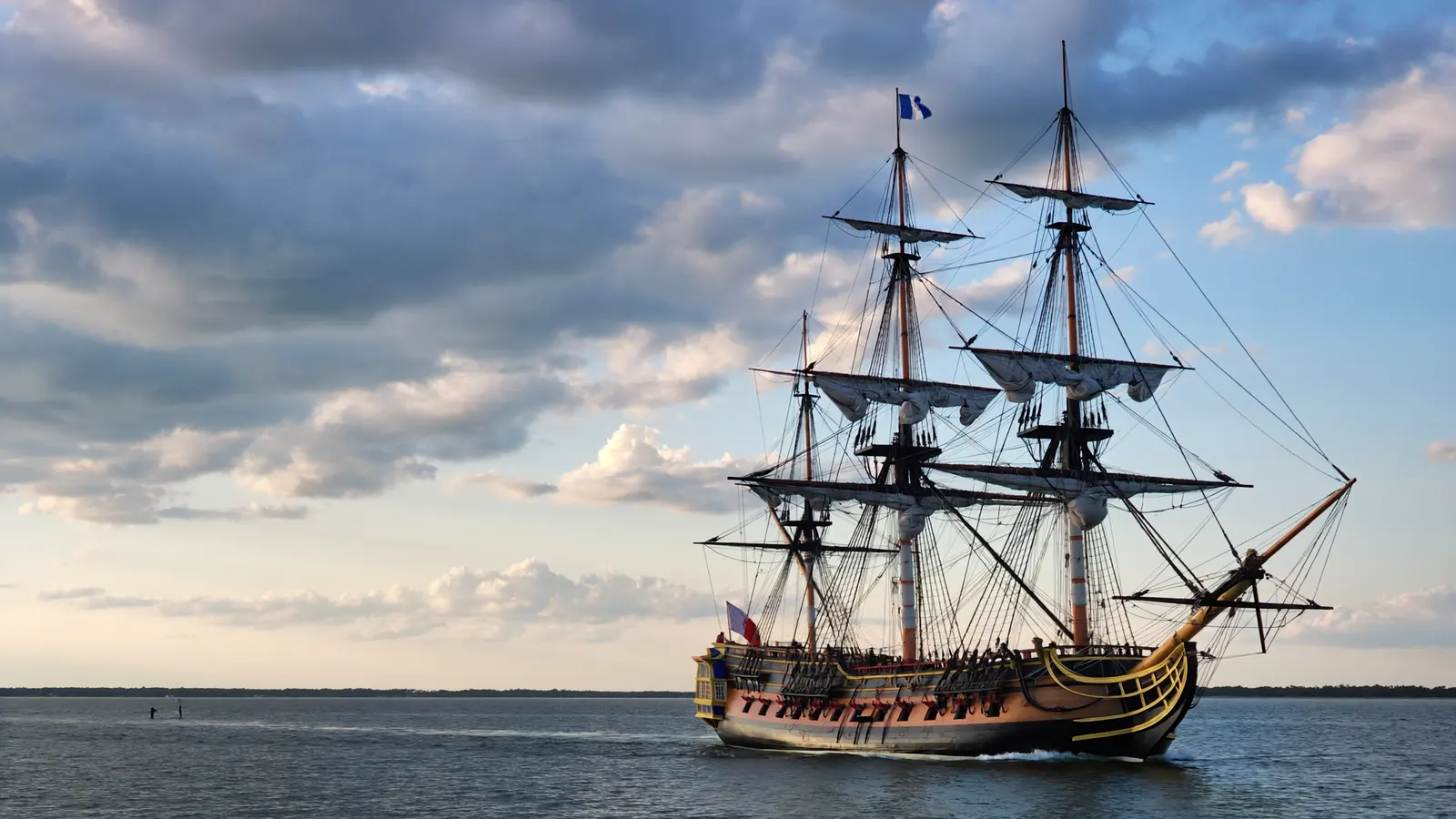
Queen Anne’s Revenge: the most famous pirate ship name

Blackbeard’s flagship name is the most analysed pirate ship name in the historical record, and it rewards analysis because it is demonstrably not accidental — every element of the name communicates something specific.
The ship was originally La Concorde, a French slave vessel that Blackbeard captured near Martinique in November 1717. He renamed it Queen Anne’s Revenge immediately. Queen Anne’s War — the American colonial name for the War of the Spanish Succession — had ended just three years earlier in 1714. Thousands of sailors and privateers who had served in that war were now unemployed, and many ended up in Nassau. Naming his ship after that war’s British monarch, framed as a revenge, spoke directly to those veterans: it positioned Blackbeard as continuing a conflict rather than simply committing crimes.
The revenge element was also personal and political. The Treaty of Utrecht that ended the war was widely seen by former privateers as a betrayal — they had been used and then discharged without equivalent peacetime employment or recognition. Queen Anne’s Revenge named that grievance. It told every sailor who heard the name that this ship’s captain understood what had been done to them and intended to make someone pay for it.
Royal Fortune and the ambition of Bartholomew Roberts

Bartholomew Roberts used the name Royal Fortune for multiple successive flagships throughout his career — each new captured vessel became the Royal Fortune, the previous one having been lost or replaced. The name reveals something specific about Roberts’ self-image and aspirations.
Roberts was the most successful pirate of the Golden Age by ships taken — an estimated 400 vessels across his career. Royal Fortune made a claim: this was not a criminal enterprise but a royal one, with fortune its explicit objective. Roberts operated with more tactical sophistication and more operational organisation than most Golden Age pirates, and his choice of name reflected a captain who saw himself as running something grander than simple brigandage. He also flew flags with elaborate designs showing him standing on two skulls, one representing Barbados and one Martinique — the two colonial jurisdictions he most resented. His names and imagery were a coherent personal mythology.
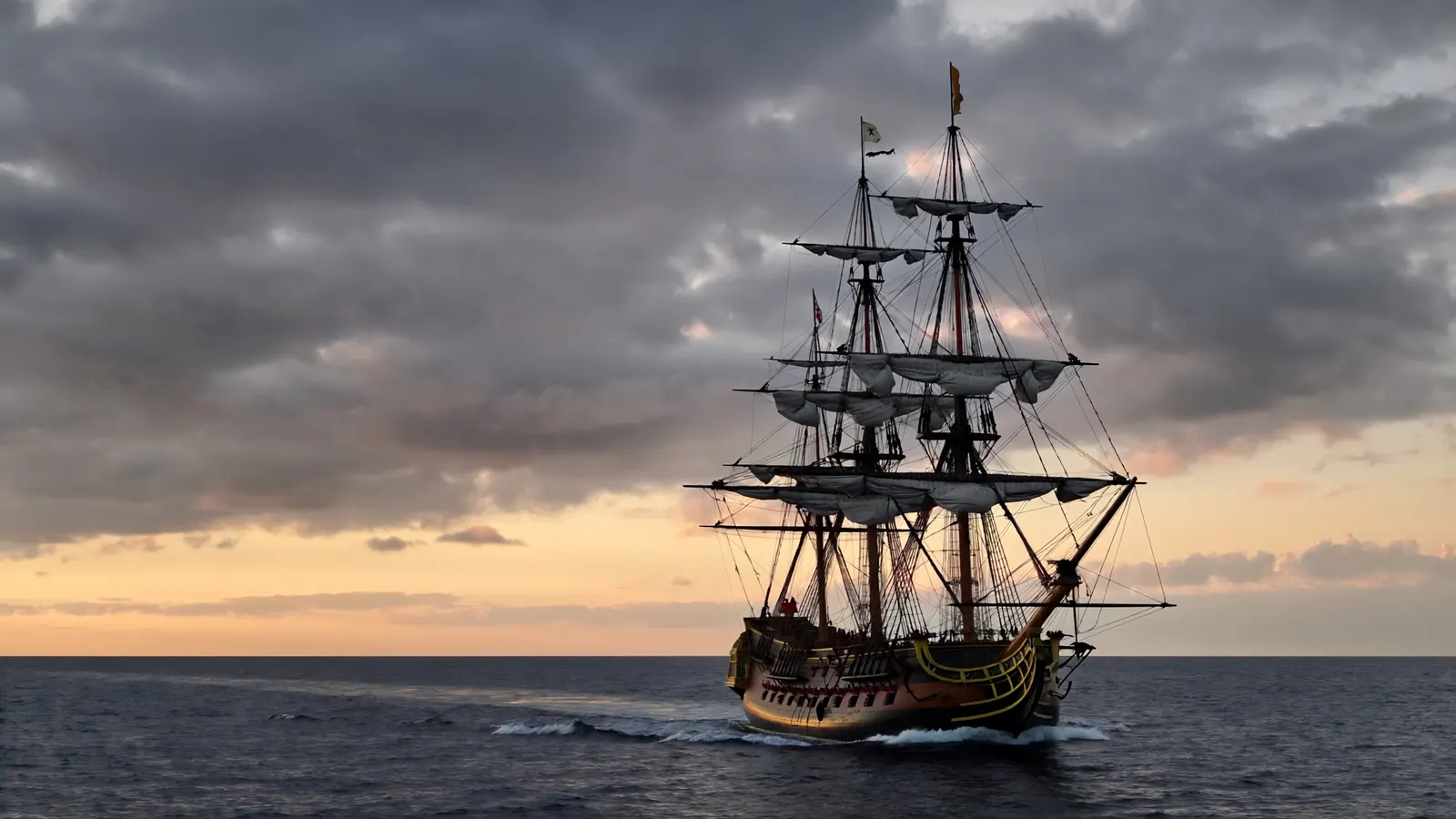
Whydah: the ship that kept its name and its history
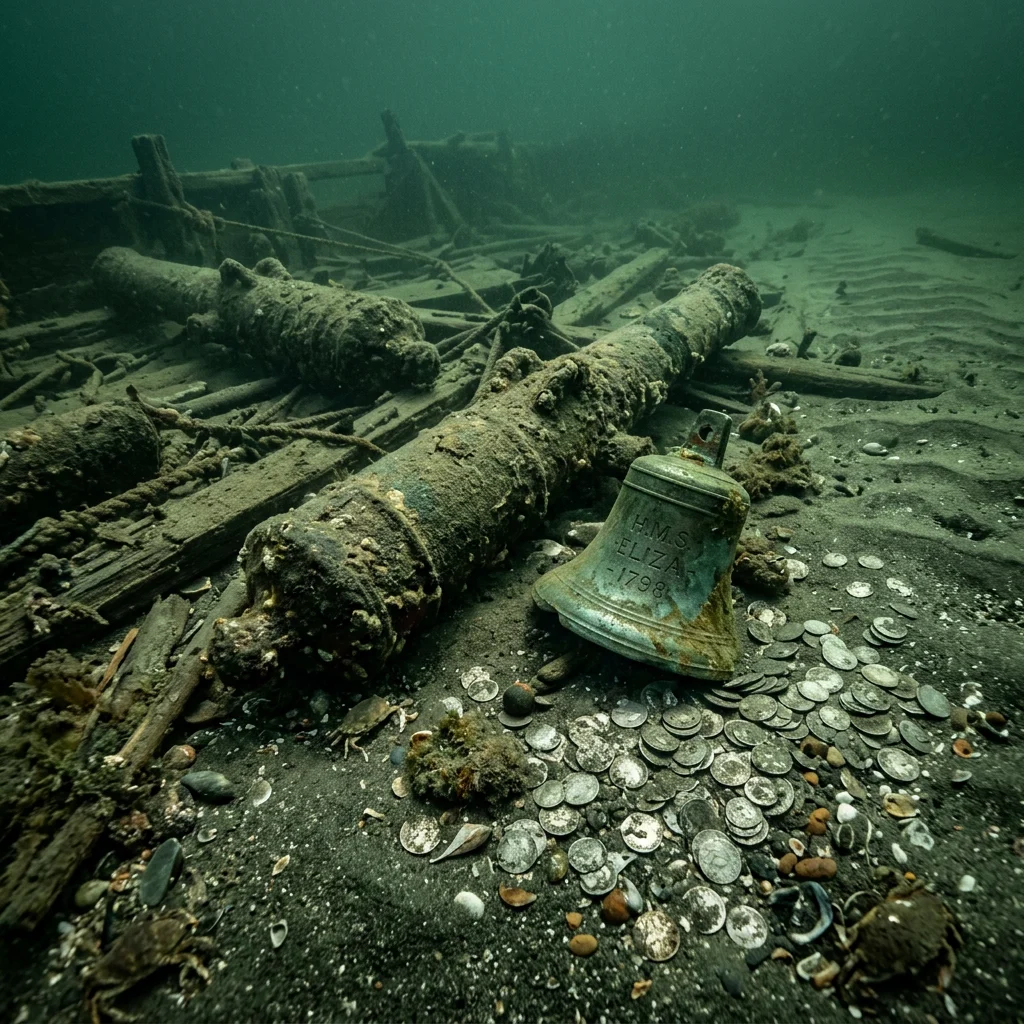
Samuel Bellamy’s most famous ship, the Whydah Gally, is unusual among pirate vessels because Bellamy kept the name the ship already had rather than renaming it. That decision, and the name itself, carries specific historical meaning.
Whydah — also spelled Ouidah — was a major slaving port on the West African coast in what is now Benin. The ship had been built specifically for the slave trade and had completed at least one Atlantic voyage carrying enslaved Africans before Bellamy captured it. By keeping the name, Bellamy preserved the vessel’s slave trade history as part of its identity — a choice that was arguably consistent with his documented political philosophy. Bellamy was recorded by survivors as giving speeches about the hypocrisy of merchants who enriched themselves through the suffering of others while condemning pirates as criminals. The Whydah’s name kept that critique visible.
The Whydah sank off Cape Cod in April 1717 in a storm, less than two months after Bellamy captured it. Its wreck, discovered by Barry Clifford in 1984 and identified by its bell, was the first pirate shipwreck ever authenticated, providing an extraordinary archaeological record of a specific Golden Age pirate vessel.
Names that communicated fear and identity
Beyond the famous flagship names, the broader pattern of pirate ship naming shows consistent use of names designed to communicate menace, claim status, or express the captain’s self-understanding as an alternative power structure.
Names like Defiance, Revenge, Adventure, and Fortune appear repeatedly across Golden Age piracy. Defiance and Revenge communicated grievance and opposition. Adventure referenced the mercantile privateering tradition from which many pirates emerged — privateers commonly named their vessels Adventure as a straightforward commercial description of a risk-taking enterprise. Fortune declared the objective explicitly. These names were not chosen from a list; they were expressions of specific worldviews held by specific captains.
The practical function of names in the pirate reputation economy also shaped choices. A name that circulated effectively — memorable, somewhat menacing, distinctive — contributed to the pre-engagement psychological pressure that made merchant captains more likely to surrender. Queen Anne’s Revenge was a name that stuck in the mind and carried associations. Royal Fortune announced a captain of ambition. These were not accidents of preference but choices made by people who understood that their name was part of their arsenal.

What are some real pirate ship names?
Queen Anne’s Revenge (Blackbeard), Whydah Gally (Samuel Bellamy), Royal Fortune (Bartholomew Roberts), Adventure Galley (William Kidd), Fancy (Henry Every), Revenge (Stede Bonnet) and William (Calico Jack Rackham).
What was the most famous pirate ship?
Blackbeard’s Queen Anne’s Revenge, a captured French slave ship that ran aground in North Carolina in 1718. The Whydah is the best-studied wreck.
What was the most common pirate ship name?
Revenge, Ranger, Fancy, Adventure and Fortune all recur. Revenge was used by Stede Bonnet and John Gow, among others.
Have any pirate ships been found?
Yes. The Whydah (1984, Cape Cod), Queen Anne’s Revenge (1996, North Carolina) and Kidd’s Quedagh Merchant (2007, Dominican Republic) are the best known.
Why did Blackbeard name his ship Queen Anne’s Revenge?
The name referenced Queen Anne’s War (the War of the Spanish Succession), which had ended in 1714 and left thousands of privateers unemployed. By naming his ship as a revenge for that war, Blackbeard positioned himself as continuing a conflict rather than committing crimes, and spoke directly to the veteran privateers who made up much of the Nassau pirate community.
Why did pirates rename captured ships?
To avoid identification by colonial authorities looking for the original vessel, to mark a new operational chapter under new command, and to choose a name that expressed the captain’s own identity and aspirations. Some pirates renamed every significant capture; others kept original names for strategic or ideological reasons.
What was the Whydah?
Samuel Bellamy’s flagship, a slave ship named after the West African slaving port of Ouidah (Benin). Bellamy kept the name after capture, preserving the ship’s slave trade history as part of its identity. The Whydah sank off Cape Cod in April 1717; its wreck, discovered in 1984, was the first authenticated pirate shipwreck.
Why did Bartholomew Roberts keep naming ships Royal Fortune?
Roberts used Royal Fortune as his flagship name across multiple successive vessels throughout his career. The name expressed his self-image as running a grand, royally scaled enterprise rather than simple brigandage. He went through at least five ships under that name as each was lost or replaced.
How did pirate ship names serve a tactical function?
Memorable, menacing names circulated through port networks and newspaper accounts, preceding a vessel to its next target and contributing to the pre-engagement psychological pressure that made merchant captains more likely to surrender. A name that stuck in the mind and carried associations of violence was part of the pirate’s arsenal — it did preparatory work before the ship arrived.
Blane Perun has been exploring Earth’s oceans and marine life for over 25 years. Founder of TheSea.Org in 1999, underwater photographer, coral aquaculture pioneer, and explorer of 80+ countries.
About Blane Perun →