Sea Otter Population — Numbers by Region, Then and Now
Before the fur trade there were somewhere between 150,000 and 300,000 sea otters around the North Pacific. By 1911 hunting had cut that to roughly 1,000–2,000 animals in a handful of remote colonies. Today the world population is usually put at around 125,000, most of them in Alaska and Russia, with about 3,000 in California. The species is listed as Endangered by the IUCN.
The sea otter population story is one of the most dramatic in marine conservation. A species that once ringed the North Pacific from Japan to Baja California was hunted down to a couple of thousand animals for its fur, then came back, unevenly, over the next hundred years. Some regions are near their historic numbers; others have crashed a second time; one, Oregon, still has no resident population at all. If you are looking for a single sea otter population figure, the honest answer is that it depends on the region and the year, and every number is an estimate from aerial, boat or shore surveys. Here is how the numbers have moved, region by region, and what drives them.
Before the fur trade
Nobody counted sea otters before the 1700s, so historic numbers are back-calculated from habitat and fur-trade records. Most scientists put the original population somewhere between 150,000 and 300,000 animals.
Sea otters lived along almost the entire rim of the North Pacific: northern Japan, the Kuril Islands, Kamchatka and the Commander Islands in Russia, the Aleutian chain and the Alaska coast, British Columbia, Washington, Oregon, California and down into Baja California, Mexico. Wherever there was shallow, rocky or soft-bottom coast with kelp or rich shellfish beds, there were otters. Native peoples hunted them for thousands of years, but at a scale that did not threaten the species.
The crash: 1741 to 1911
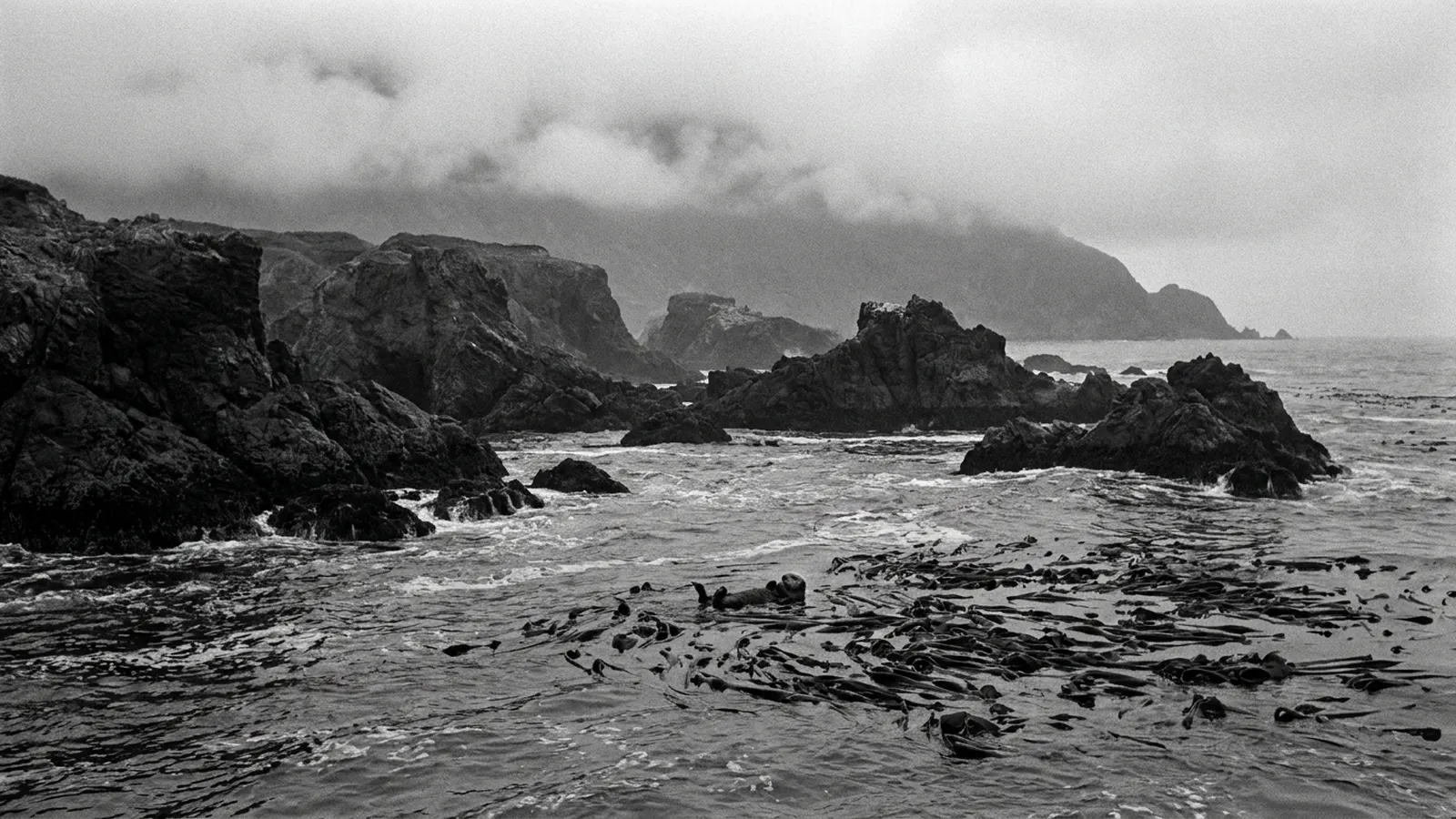
Everything changed after the Russian Bering expedition returned from the Commander Islands in 1742 with sea otter pelts. Sea otter fur, the densest of any animal, became one of the most valuable furs in the world, especially in China. Russian, then British, American and Spanish traders pushed down the coast over the next 170 years, and hunting continued even as otters became scarce. We cover that history in detail in what happened to sea otters during the 1800s.
By the early 1900s sea otters were commercially extinct. The International Fur Seal Treaty of 1911, signed by the United States, Russia, Japan and Britain (for Canada), banned commercial sea otter hunting. By then only around 1,000 to 2,000 animals survived in about 13 scattered remnant colonies, mostly in the Aleutians, the Kurils and Commander Islands, plus a tiny group off Big Sur in California and one in Mexico that later disappeared. Several of those colonies were so small they were thought to be gone.
| Period | Approximate world population | What was happening |
|---|---|---|
| Before 1741 | ~150,000–300,000 | Full range from Japan to Baja California |
| 1911 | ~1,000–2,000 | Fur trade ends; ~13 remnant colonies |
| 1960s–1970s | Tens of thousands | Aleutians recovered; translocations to SE Alaska, BC, Washington |
| 1980s | Peak recovery in many areas | Aleutians near carrying capacity |
| 1990s–2000s | Fell in SW Alaska | Aleutian otters drop by most of their number |
| Today | ~125,000 (rough) | Growth in SE Alaska and BC; California flat; SW Alaska low |
Sea otter population by region today
Numbers below are rounded and drawn from agency surveys over recent years. Surveys are done at different times and with different methods in each country, so treat them as a picture of where otters are, not an exact census.
| Region | Subspecies | Rough current size | Trend |
|---|---|---|---|
| Russia (Kurils, Commanders, Kamchatka) | Asian (E. l. lutris) | Tens of thousands | Mixed |
| Southwest Alaska (Aleutians, Alaska Peninsula) | Northern (E. l. kenyoni) | Tens of thousands, far below the 1980s | Low; ESA Threatened |
| Southcentral Alaska (Prince William Sound, Kenai) | Northern | Tens of thousands | Stable to growing |
| Southeast Alaska | Northern | Over 25,000 from ~400 translocated | Strong growth |
| British Columbia | Northern | Several thousand from 89 translocated | Growing |
| Washington | Northern | About 2,000–3,000 from 59 translocated | Growing |
| Oregon | — | No resident population | Reintroduction under study |
| California | Southern (E. l. nereis) | About 3,000 | Flat; ESA Threatened |
| Japan (Hokkaido) | Asian | A small number | Recolonising |
For the three subspecies and how they differ, see sea otter subspecies. For a map of where they live, see where do sea otters live?
Alaska: boom, crash and translocation
Alaska holds most of the world’s sea otters, but the trend line looks completely different depending on where you stand. In the Aleutian Islands, the remnant colonies grew steadily after 1911 and by the 1970s and 1980s many islands were at or near carrying capacity. Then, starting in the late 1980s and through the 1990s, the population across the Aleutians collapsed, falling by most of its number over large areas. In 1998 James Estes and colleagues published a paper in Science arguing that killer whales, possibly switching prey as seal and sea lion numbers fell, were eating far more otters. The theory is still debated, but no other cause fits the data as well. The southwest Alaska population was listed as Threatened under the US Endangered Species Act in 2005. See do killer whales eat sea otters?
Southeast Alaska tells the opposite story. Sea otters had been wiped out there, and between 1965 and 1969 a little over 400 otters were moved from Amchitka and Prince William Sound to the outer coast. That founding group has grown into tens of thousands, and otters are now spreading into the inside waters, where they compete with crab, clam and urchin fisheries. See sea otters in Alaska for where to see them.
California: the slow comeback
California’s otters were thought to be extinct until a small group, often said to be around 50 animals, was publicly confirmed near Bixby Creek on the Big Sur coast in 1938. Every southern sea otter alive today descends from that group. Their recovery has been much slower than in Alaska. The US Geological Survey runs an annual range-wide count, and the index has hovered around 3,000 for most of the last decade, peaking a little above that in the mid-2010s and dipping since.
Why so slow? Researchers point to a combination of white shark bites, which became a leading cause of death at the edges of the range, plus disease, parasites such as Toxoplasma washed in from land, domoic acid from harmful algal blooms, food limitation in the crowded centre of the range, and the simple fact that the range has barely expanded north or south. Elkhorn Slough and Monterey Bay remain strongholds; see sea otters in Monterey Bay. The southern sea otter has been listed as Threatened since 1977.
British Columbia, Washington and Oregon
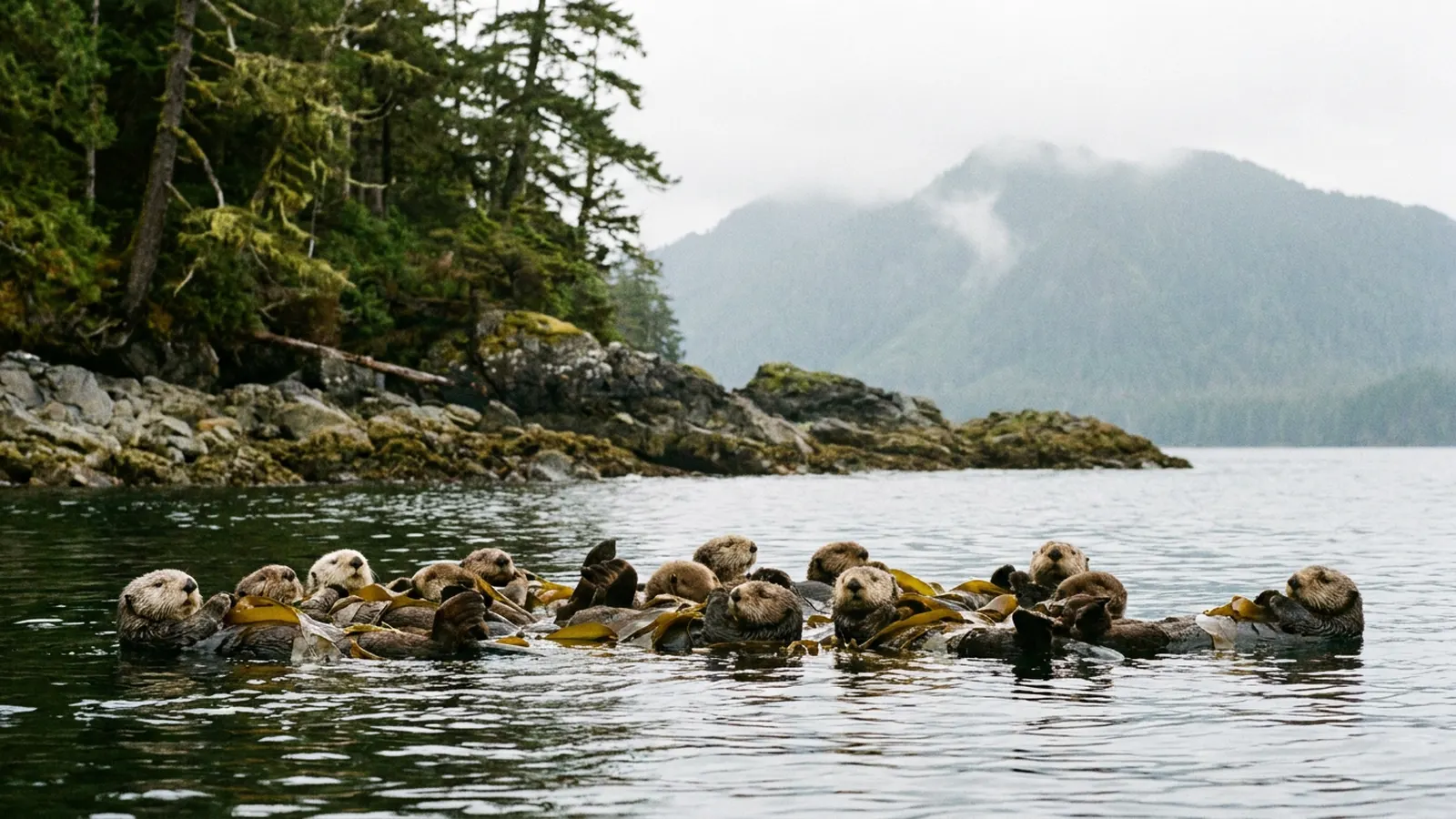
The Pacific Northwest lost all its otters to the fur trade. Between 1969 and 1972, 89 otters from Alaska were released on the west coast of Vancouver Island, and in 1969 and 1970, 59 were released off the Olympic Peninsula in Washington. Both populations took hold and have grown into thousands, spreading along the outer coasts. An attempt in Oregon around the same time failed; the released animals disappeared within a few years. Oregon has been studying a new reintroduction, and the US Fish and Wildlife Service has published a feasibility assessment for bringing otters back to the coast between Washington and California.
Why the numbers matter: kelp, urchins and fisheries
Sea otter population size is not just a conservation scorecard. Otters are a keystone species: where they are abundant, they eat sea urchins and keep them from mowing down kelp forests; where they are absent, urchin barrens often take over. The Aleutian collapse of the 1990s was followed by urchin booms and kelp loss on many islands. At the same time, growing otter numbers in Southeast Alaska have cut into commercial shellfish catches, and that conflict shapes how people in those communities feel about recovery. See our main sea otter guide for the kelp story and why sea otters are endangered for the threats.
How sea otters are counted
Counting a dark animal that spends its life in kelp and choppy water is harder than it sounds. In California, the USGS and partners combine shore-based counts with spotting scopes along the mainland coast and aerial counts where the shoreline is hard to reach, then report a three-year running average as the official index so that one bad weather year does not swing the number. In Alaska, where coastlines run for thousands of miles, biologists fly aerial transects over sampled areas and use correction factors for animals that were underwater or missed, then scale up to the whole region. Russia and Canada use their own boat and aerial methods. Each approach has its own error bars, which is why a global total should always be read as a rough figure. What matters most is the trend in each place, measured the same way year after year.
How I read sea otter population numbers
My background is reef keeping since 1996 and diving reefs from the Caribbean to the South Pacific, not counting otters from a plane. But I have watched reef populations rise and fall over decades, and one lesson carries over: a single number never tells the story. A healthy global estimate can hide a region that is quietly collapsing, the way the Aleutians did while Southeast Alaska was booming. When I look at sea otter figures, I look at three things: the trend in each region, whether the range is expanding, and what is happening to the food supply and predators. By those measures, Southeast Alaska, British Columbia and Washington look good, California is holding but stuck, and southwest Alaska is still the place to worry about.
If you want to see the recovery for yourself, the outer coast of Vancouver Island, Kachemak Bay and Prince William Sound in Alaska, and Monterey Bay in California are all places where a pair of binoculars will usually find otters rafting in the kelp. Keep your distance; every population here is protected by law.
How many sea otters are left in the world?
Roughly 125,000, though estimates vary by survey year and method. Most live in Alaska and Russia.
How many sea otters are in California?
About 3,000 southern sea otters, a number that has changed little over the past decade.
How many sea otters were there before the fur trade?
Probably between 150,000 and 300,000 across the North Pacific.
Is the sea otter population increasing?
In Southeast Alaska, British Columbia and Washington, yes. In California it is roughly flat, and in southwest Alaska it remains far below its 1980s level.
Why did sea otter numbers drop in the Aleutians?
The leading explanation is increased killer whale predation from the late 1980s onward, though the cause is still debated.
Are sea otters endangered?
The IUCN lists the species as Endangered. In the US, the southern and southwest Alaska populations are listed as Threatened.
- IUCN Red List: Enhydra lutris species assessment.
- US Geological Survey: annual California sea otter census results.
- US Fish and Wildlife Service: northern and southern sea otter stock assessments and reintroduction feasibility assessment.
- Estes, J.A., Tinker, M.T., Williams, T.M. & Doak, D.F. (1998). Killer whale predation on sea otters linking oceanic and nearshore ecosystems. Science 282: 473–476.
- Kenyon, K.W. (1969). The Sea Otter in the Eastern Pacific Ocean. North American Fauna 68.
Blane Perun has been exploring Earth’s oceans and marine life for over 25 years. Founder of TheSea.Org in 1999, underwater photographer, coral aquaculture pioneer, and explorer of 80+ countries.
About Blane Perun → More on sea otters →