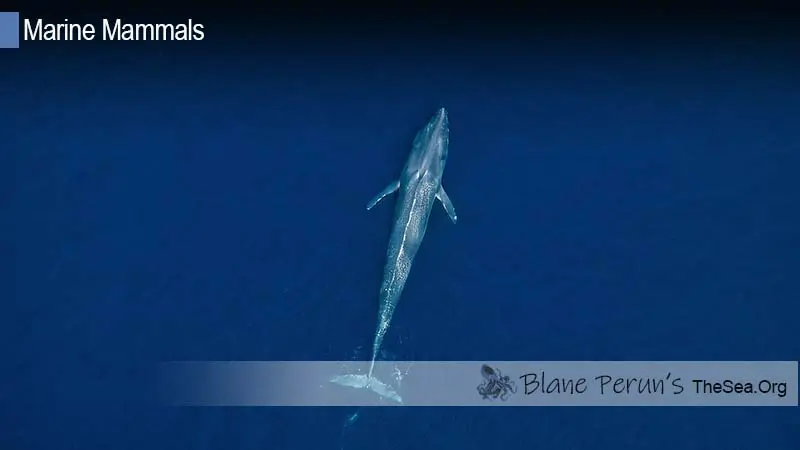
The blue whale (Balaenoptera musculus) is the largest animal ever to have lived on Earth — larger than any known dinosaur. Adults reach up to 33 meters in length and weigh as much as 200,000 kg (200 metric tons). Their hearts are the size of a small car. Their tongues weigh as much as an elephant. And yet the largest animal in Earth’s history survives almost entirely on krill — shrimp-like crustaceans measuring just 2–3 cm. Blue whales were hunted to the edge of extinction in the 20th century; they are recovering, but slowly, and remain Endangered today.
Blue Whale Size: The Numbers
- Maximum confirmed length: 33.6 meters (Antarctic female, 1909)
- Typical adult length: 24–27 meters (females larger than males)
- Maximum weight: ~199,000 kg (Antarctic blue whale)
- Heart size: ~600 kg — the largest heart of any animal; roughly the size of a golf cart
- Tongue weight: ~2,700 kg — approximately the weight of an adult elephant
- Aorta diameter: ~23 cm — large enough for a human to crawl through
- Heartbeat: 4–8 beats per minute at rest; drops to 2 beats per minute during deep dives
- Blow height: 9–12 meters — the tallest blow of any whale
- Calf size at birth: ~7 meters, ~2,700 kg — the largest newborn of any animal
Blue Whale Subspecies
Four subspecies are recognized:
- Antarctic blue whale (B. m. intermedia): The largest subspecies — the animals that set size records. Once the most abundant; now the most severely reduced by whaling.
- Northern blue whale (B. m. musculus): Found in the North Atlantic and North Pacific. Slightly smaller than Antarctic.
- Pygmy blue whale (B. m. brevicauda): Found in the Indian Ocean and South Pacific. Shorter tail region; reaches “only” about 24 meters. A significant portion of the current blue whale population.
- Chilean blue whale (B. m. unnamed subspecies): Found in the eastern South Pacific; may be a separate subspecies.
What Do Blue Whales Eat?
Blue whales eat almost exclusively krill — particularly Euphausia superba in Antarctic waters and Euphausia pacifica in the North Pacific. The scale of their consumption is staggering:
- An adult blue whale consumes approximately 3,600–4,000 kg of krill per day during peak feeding season
- Each lunge forward with mouth open engulfs 80,000 liters of krill-rich water
- Baleen plates (rows of keratin plates hanging from the upper jaw) filter the krill as water is expelled through the sides of the mouth
- A blue whale has approximately 300–400 baleen plates per side, each up to 100 cm long
- They lunge feed up to 100 times per day during the Antarctic feeding season
Blue whales follow krill — migrating thousands of kilometers between high-latitude feeding grounds and low-latitude breeding areas. In Antarctica, summer krill concentrations can be dense enough to appear red from the surface.
Blue Whale Vocalizations: The Loudest Animal
Blue whales produce the loudest sounds of any animal — low-frequency moans and pulses reaching 188 decibels, produced in the infrasound range (10–40 Hz) largely below human hearing. These calls travel hundreds to thousands of kilometers through the ocean, allowing whales to communicate across entire ocean basins.
Blue whale song has been used by researchers to track population movements and identify separate populations — different groups have different “dialects” with distinct call patterns. The calls have also been used to study long-term trends: recordings going back decades show blue whale call frequencies have shifted downward over time, possibly due to population recovery (larger whales produce lower calls) or changes in ocean noise conditions.
Blue Whale Migration
Blue whales are among the most wide-ranging animals on Earth. They follow a seasonal pattern:
- Summer (high latitudes): Intensive feeding in polar and subpolar waters where krill concentrate — Antarctic, North Pacific, North Atlantic
- Winter (low latitudes): Migration to warmer tropical and subtropical waters for breeding; feeding rate drops dramatically
Individual whales have been tracked traveling over 4,000 km in a single migration. They rely on dense krill aggregations to build up massive fat reserves during summer feeding that sustain them through winter when little feeding occurs.
Conservation: Near-Extinction and Recovery
Blue whales were hunted intensively from 1900 to 1967, when commercial whaling finally ceased under international pressure. In that period, approximately 350,000 blue whales were killed — reducing the global population from an estimated 200,000–300,000 to fewer than 10,000. The Antarctic population was reduced to possibly 400–1,400 individuals by the 1960s.
Recovery has been slow — blue whales reproduce at rates too low to support rapid population rebound. A female produces a single calf every 2–3 years after a 10–12 month gestation, reaching sexual maturity at 5–15 years. The current global population is estimated at 10,000–25,000 individuals. The Antarctic subspecies remains critically depleted.
Current threats include vessel strikes (blue whales surface predictably and move slowly, making them vulnerable to ship traffic), entanglement in fishing gear, ocean noise, and climate-driven krill decline.
Key Facts
- Scientific name: Balaenoptera musculus
- Maximum length: 33.6 meters
- Maximum weight: ~200,000 kg
- Diet: Krill — up to 4,000 kg/day
- Call volume: Up to 188 dB
- Call range: Hundreds to thousands of km
- Lifespan: 80–90 years estimated
- Pre-whaling population: 200,000–300,000
- Current population: 10,000–25,000
- Conservation status: Endangered (IUCN)
Frequently Asked Questions
Is the blue whale bigger than any dinosaur?
By weight, yes — the blue whale is the most massive animal ever to have lived. The largest dinosaurs (Argentinosaurus, Patagotitan) were enormous but likely reached only 70–80 metric tons — less than half a blue whale’s maximum mass. By length, some sauropod dinosaurs may have equaled or exceeded blue whales, but mass comparisons favor the whale.
How long can a blue whale hold its breath?
Blue whales typically surface every 5–15 minutes during normal activity. During deep feeding dives, they can remain submerged for up to 30 minutes. Their hearts slow to 2 beats per minute during deep dives to conserve oxygen — one of the lowest recorded heart rates for a large mammal during activity.
Can blue whales be heard by humans?
The infrasound frequencies of blue whale calls (10–40 Hz) are below the threshold of human hearing (20 Hz and above). We can sometimes feel rather than hear very loud infrasound. Blue whale calls recorded and played back at accelerated speed — raising the frequency into the audible range — reveal haunting, eerie vocalizations that have been widely used in nature documentaries and music.
How many blue whales are left?
Current estimates suggest 10,000–25,000 blue whales globally, representing roughly 5–10% of the pre-whaling population. Recovery continues but is slow — the Antarctic subspecies in particular remains severely depleted. Some regional populations, such as the northeast Pacific population feeding off California, show clearer signs of recovery.