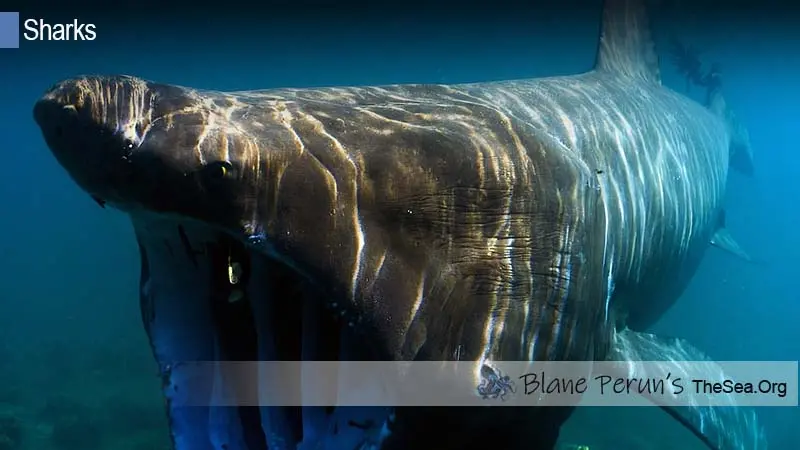
The megamouth shark (Megachasma pelagios) was completely unknown to science until November 15, 1976, when a US Navy research vessel hauled up its anchor near Hawaii and found a 4.5-meter shark tangled in the sea anchor. The discovery of an entirely new shark genus, family, and species of this size was extraordinary. Nearly five decades later, fewer than 300 megamouth sharks have ever been recorded — yet analysis of their distribution and behavior suggests they may be far more common in the deep ocean than encounters imply.
Physical Description
The megamouth is immediately recognizable:
- Mouth: Enormous, terminal (at the very tip of the head), with rubbery lips lined with bioluminescent tissue. The mouth can gape wide enough to engulf a person — though the shark feeds only on tiny organisms.
- Size: Adults reach 4–7 meters. Males are typically 4–5 m; females 5–7 m. Maximum weight estimated at approximately 1,215 kg.
- Body: Soft, flabby, with a large rounded head and small tail fin — consistent with a slow-moving filter feeder.
- Color: Dark brownish-black above, white below, with a striking white band on the upper jaw.
- Teeth: Many small, hook-like teeth — for trapping, not cutting.
How Does the Megamouth Feed?
The megamouth is one of only three filter-feeding shark species, alongside the whale shark and basking shark. It swims forward with its enormous mouth agape, engulfing water and filtering krill, copepods, and jellyfish. It appears to use suction to draw in prey-rich water — possibly aided by bioluminescent tissue in the mouth that may attract organisms in the dark mesopelagic zone.
Habitat and Diel Migration
The megamouth inhabits the mesopelagic zone — 150–1,000 meters during the day. It performs a diel vertical migration: rising toward the surface (12–25 meters) at night to feed in shallower plankton-rich water, then descending at dawn. This precisely tracks the daily vertical movement of its prey — krill and other zooplankton perform the same migration, and the megamouth follows them.
A tagged individual off California confirmed this pattern clearly — daytime hours at 150+ meters, nighttime in the upper 15 meters. This behavior explains why megamouths rarely encounter humans: surface fishing and shallow diving don’t reach their daytime habitat.
Discovery Record
- First specimen: 1976 (Hawaii)
- Second specimen: 1984 (California)
- Third specimen: 1988 (Australia)
- Total recorded by 2024: fewer than 300 individuals globally
Most have been caught incidentally in fishing nets or found stranded. Fewer than 10 have been observed alive in their natural habitat. Given the species’ global range across all tropical and subtropical oceans, a true population of 300 would be impossibly small — the actual population is almost certainly much larger, with encounters rare because the species spends most of its life at inaccessible depths.
Taxonomy
The megamouth is the sole member of genus Megachasma and family Megachasmidae. It belongs to the order Lamniformes — the mackerel sharks — which also includes the great white, mako, and basking shark. An unusual mix of relatives given the megamouth’s very different ecology.
Key Facts
- Scientific name: Megachasma pelagios
- Discovery: 1976 — unknown before this date
- Length: 4–7 meters
- Weight: Up to ~1,215 kg
- Diet: Krill, copepods, jellyfish — filter feeder
- Depth: 150–1,000 m by day; 12–25 m at night
- Total encounters: Fewer than 300
- Unique feature: Bioluminescent mouth lining
- IUCN status: Least Concern — but data insufficient
Frequently Asked Questions
Why was the megamouth undiscovered for so long?
It spends most of its life at mesopelagic depths — 150–1,000 meters — following its prey’s diel migration. Humans simply didn’t encounter it. Surface fishing and shallow diving don’t access this zone. The 1976 discovery was genuinely accidental: a sea anchor, not a fishing net, brought up the first specimen.
Is the megamouth shark dangerous?
No. Despite its dramatic appearance, the megamouth feeds exclusively on tiny zooplankton and has no capacity to attack large prey. It is slow-moving, passive, and has tiny teeth adapted for sieving water. The few live encounters by divers have reported a non-reactive, apparently placid animal.
How many megamouth sharks exist?
Unknown — the encounter record of fewer than 300 is almost certainly a severe undercount. The species has a global range across three ocean basins; a true population that small would be dangerously close to extinction. Most researchers believe the actual population is substantially larger, living at depths that make human encounters extremely rare.