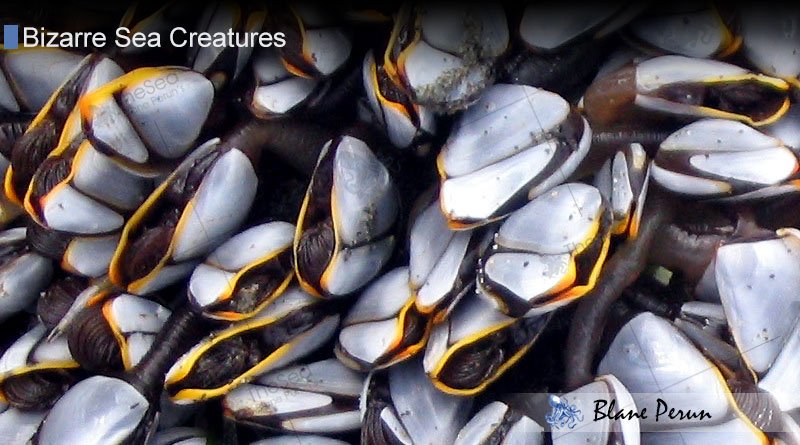
Not Mollusks — Crustaceans
Barnacles are among the most familiar marine organisms — found on every rocky shore, dock, boat hull, and whale worldwide — yet most people misidentify them. Barnacles are not mollusks. They are crustaceans, more closely related to crabs and lobsters than to mussels or oysters. The hard shell that makes them look like mollusks is a convergent adaptation — a separate evolutionary solution to the same problem of protecting a soft body.
A Life Cemented Upside Down
The barnacle life cycle is one of the most counterintuitive in the animal kingdom. Barnacle larvae are free-swimming and look like tiny crustaceans — they swim, feed, and actively select a settlement surface. Once they find a suitable spot, they cement themselves to it head-first, permanently and irreversibly, and build a shell around their upturned bodies. The barnacle then spends the rest of its life literally standing on its head.
Feeding happens through the opening at the top of the shell: the barnacle extends its feathery cirri (modified legs) into the water to sweep plankton and organic particles inward. When the tide falls or the animal is disturbed, the plates close tightly to retain moisture and protect the soft body inside.
The Strongest Natural Glue
The cement barnacles use to attach to surfaces is one of the strongest natural adhesives known — capable of withstanding enormous shear forces and bonding effectively to nearly any surface, including Teflon. Material scientists have been studying barnacle cement for decades hoping to develop waterproof surgical adhesives and marine coatings. The adhesive works through a combination of proteins and lipids and cures underwater in conditions that defeat most synthetic glues.
Reproduction
Barnacles are hermaphroditic — each individual has both male and female reproductive organs. Since adults cannot move, fertilization requires a neighbor. Barnacles have the longest penis relative to body size of any animal — proportionally up to eight times the body length — allowing them to reach neighboring barnacles for cross-fertilization without either individual moving.
FAQs
Are barnacles harmful?
To ships and infrastructure, yes — barnacle fouling increases drag significantly, costing the shipping industry billions in fuel and maintenance annually. To marine animals like whales, they are generally harmless commensals.
Can you eat barnacles?
Yes. Goose barnacles (Pollicipes) are a delicacy in Spain and Portugal, sold as percebes and considered a luxury seafood. Acorn barnacles are edible but less commonly eaten.