What Happens When Coral Reefs Die? — The Chain Reaction Beneath the Waves
When the corals on a reef die, their skeletons are quickly covered by algae, and the reef community changes. Fish and invertebrates that depend on living coral for food or shelter decline or disappear. Over the following years, bioeroding organisms and waves break the dead skeletons down, and the reef gradually flattens into rubble, losing the structure that sheltered marine life and broke incoming waves. Coasts become more exposed to storms and erosion, fisheries that feed coastal communities shrink, tourism suffers, and beaches that depend on reef sand can erode. Reefs can recover if conditions improve, but recovery takes years to decades.
A dead reef does not vanish overnight. At first it can look almost the same — the shapes are still there, just bleached white and then furred with brown algae. But underneath, a chain reaction has started. The reef stops growing, the animals that relied on living coral move away or die, and the structure that took centuries to build begins to break down. The effects spread beyond the reef itself to coastlines, fisheries and the people who depend on them.
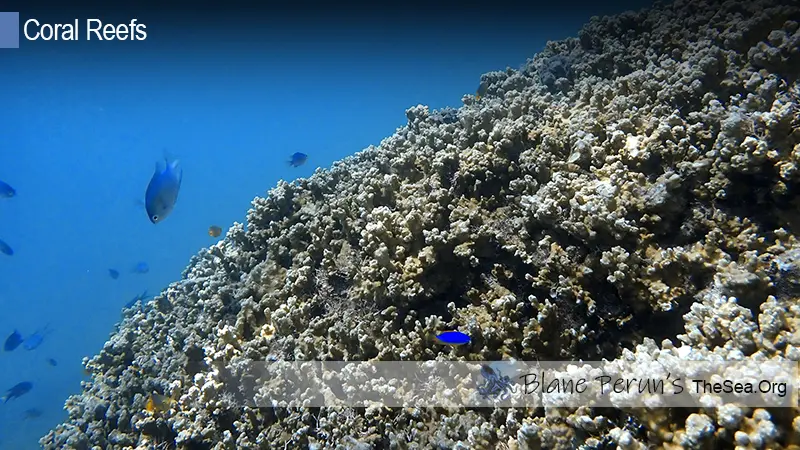
How coral reefs die
Most mass coral deaths today follow marine heatwaves, but there are many causes.
The most widespread cause of coral death today is bleaching during marine heatwaves: corals expel the algae that feed them and, if heat persists, starve. Other causes include coral disease, outbreaks of coral-eating crown-of-thorns starfish, storm damage, sediment and pollution, destructive fishing such as blast fishing, and ocean acidification, which slows coral growth. Often several of these act together. You can read about the triggers in why corals expel zooxanthellae and what kills coral reefs.
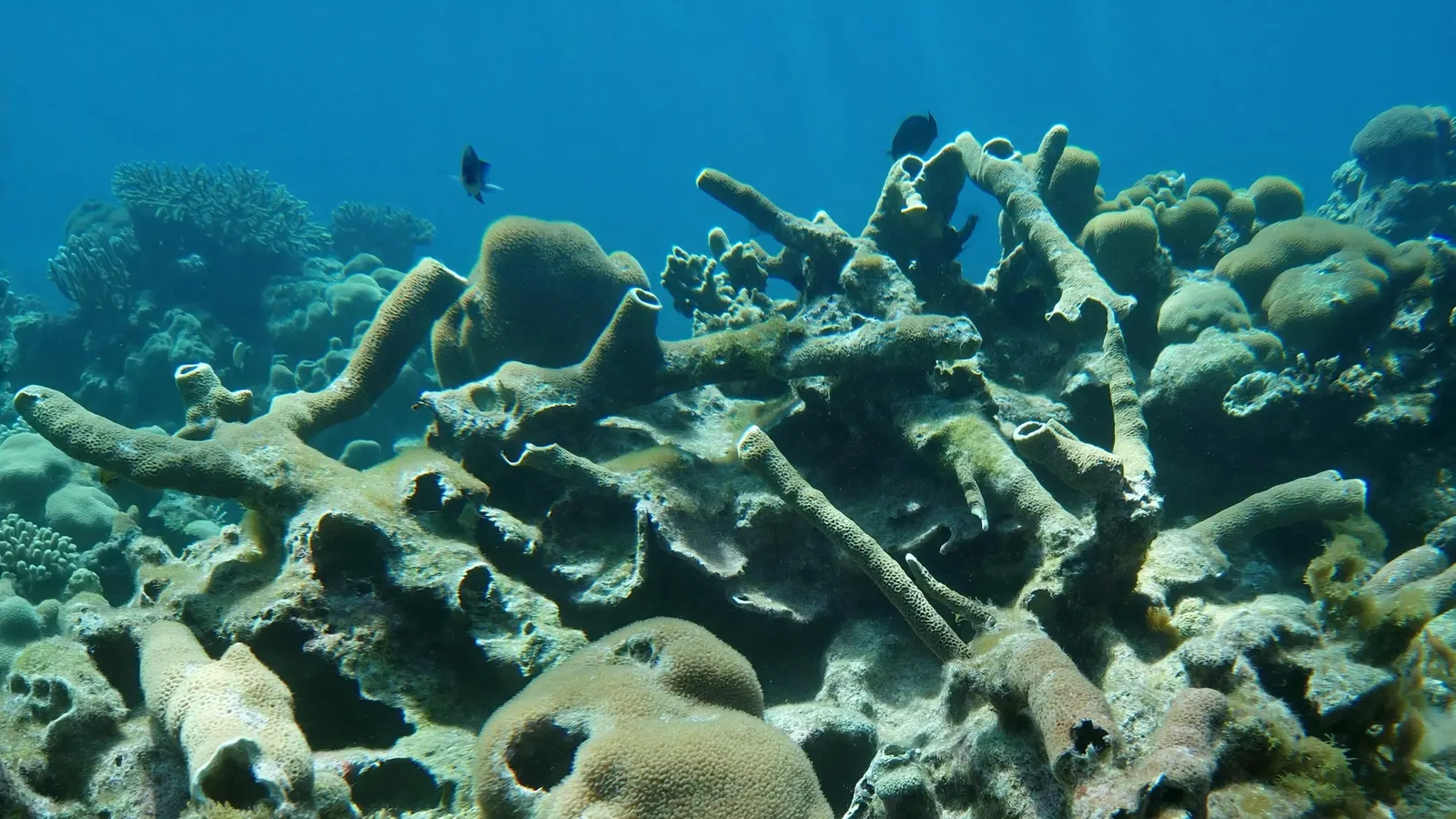
The reef community comes apart
Without living coral, many reef species lose their food and their homes.
Within days to weeks of corals dying, their bare skeletons are colonised by turf algae and later by larger seaweeds. Animals that feed directly on coral, such as many butterflyfish, decline quickly. Small fish and invertebrates that shelter among living coral branches, such as some damselfish, gobies and coral crabs, lose their homes. Coral-dependent species can disappear from a reef within months, and studies after major bleaching events have recorded steep drops in the diversity of reef fish.
Some animals do well, at least at first. Herbivorous fish may benefit from the burst of algae, and the dead skeletons still provide some shelter. But as the structure breaks down, even these lose habitat. Over time, a once-diverse coral reef can become a simpler community dominated by algae, sponges or soft corals, with far fewer species. See what animals and plants live in coral reefs for what is at stake.
The reef structure breaks down
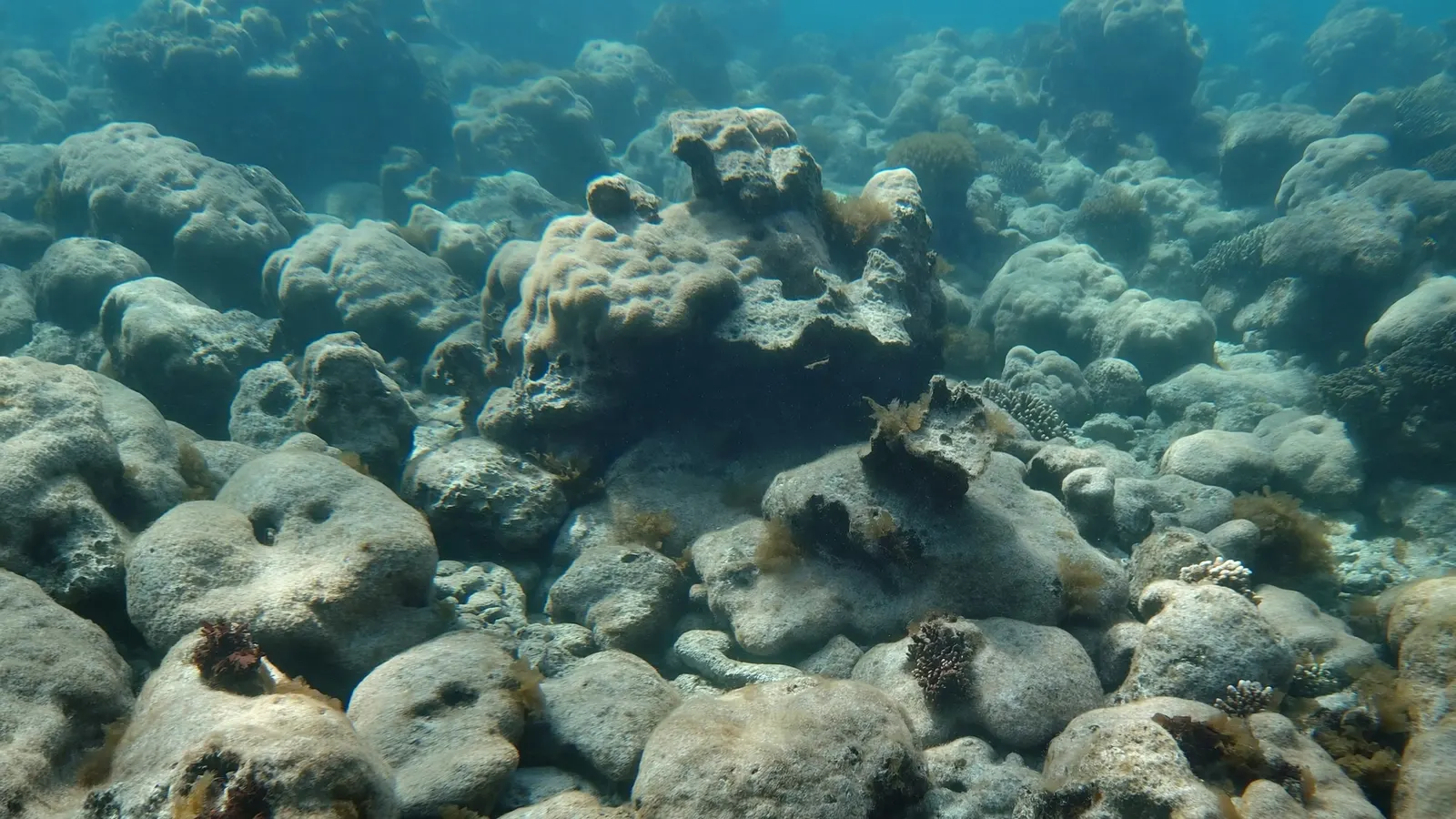
Living coral builds the reef. Once it stops, erosion takes over.
A healthy reef is in a constant tug-of-war between building and erosion. Corals and coralline algae lay down limestone, while waves, boring sponges, worms, molluscs, sea urchins and grazing parrotfish wear it away. On a healthy reef, building wins. When corals die, building slows or stops, but erosion continues. Dead skeletons become brittle and riddled with holes, then collapse into rubble during storms.
Over years, the complex three-dimensional reef — full of caves, ledges and overhangs — is gradually flattened. Scientists have documented this “flattening” on many Caribbean reefs. Loose rubble also makes it harder for new corals to settle and survive, because it moves around in storms. Read more about how reefs are built in what forms the structure called a coral reef.
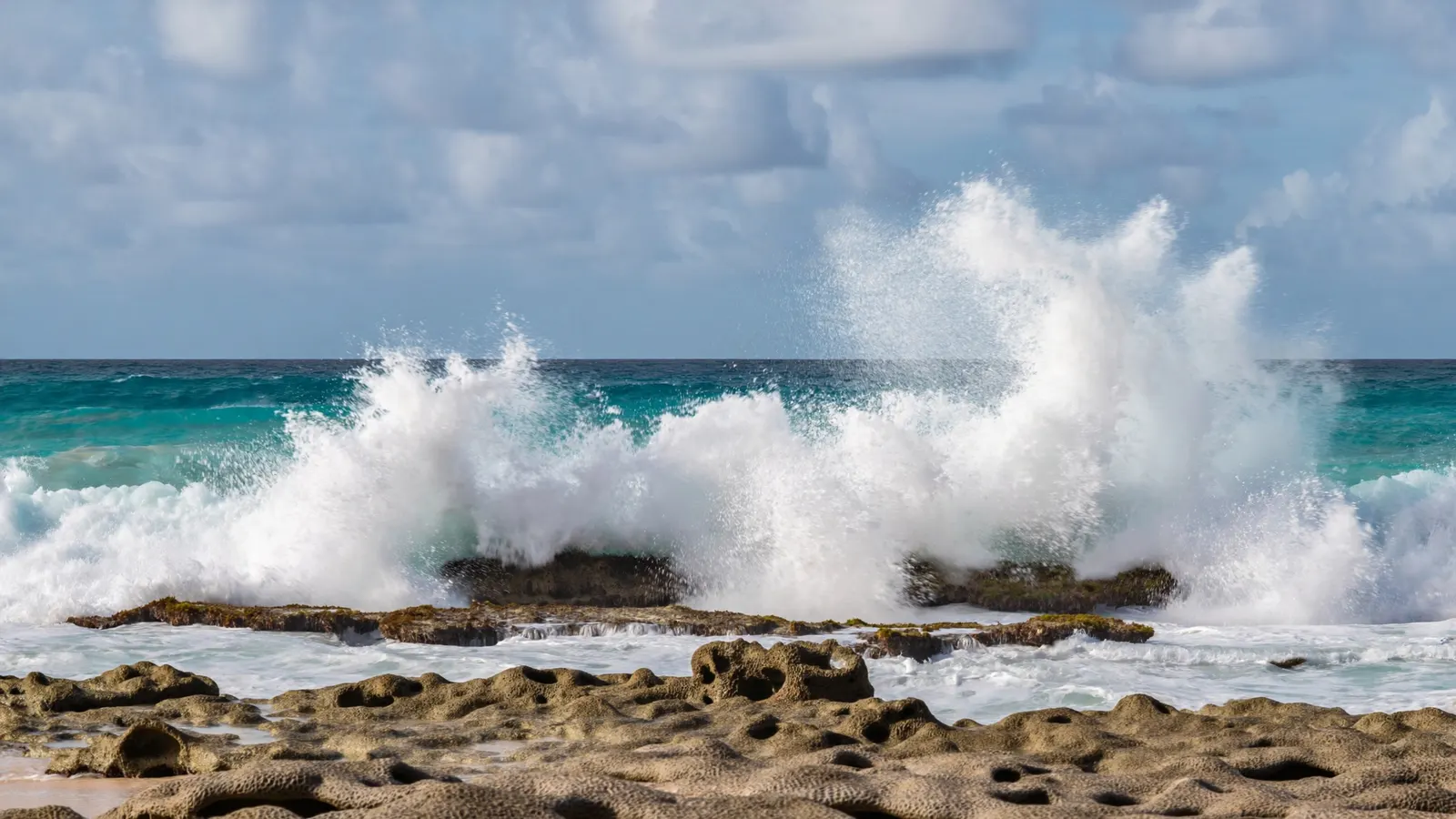
Coastlines lose their natural shield
Reefs act as breakwaters. Without them, waves hit the shore harder.
Coral reefs, especially their shallow crests, absorb and break up incoming waves. A widely cited global review found that healthy reefs can reduce wave energy reaching the shore by around 97%. That protection shelters beaches, lagoons, mangroves, seagrass beds, coastal towns and infrastructure from storms and erosion. When reefs die and flatten, more wave energy reaches the coast, increasing erosion and flood risk — a growing concern as sea levels rise. Many low-lying islands and atolls depend on reefs not only for protection but also for the sand that builds their beaches and land.
Food, jobs and economies suffer
Hundreds of millions of people depend on reefs for food, income or coastal protection.
Reef fisheries are a major source of protein for coastal communities across the tropics, especially in small island nations. When reefs degrade, the fish that people catch for food often decline or shift to less valuable species. Tourism based on diving, snorkelling and beaches is worth billions of dollars a year worldwide and can fall when reefs lose their colour and life. Reefs also hold medical and scientific value: compounds from reef organisms have been studied for new medicines. Losing reefs means losing these benefits, often for the communities least able to replace them. See why coral reefs are important.
Why prevention matters most
It is far easier to keep a reef alive than to rebuild one.
Coral restoration — growing corals in nurseries and replanting them — can help locally, but it works on the scale of hectares, while reefs are lost on the scale of whole regions. The most effective protection combines local action — reducing pollution, protecting herbivorous fish, managing fishing and coastal development, and creating well-enforced marine protected areas — with global action to limit ocean warming. Healthy reefs recover better from disturbance, so reducing local stress buys time. Learn more at coral reef conservation and how coral reefs have changed over time.
Related on TheSea
- What Are Coral Reefs Made Of?
- What Do Coral Reefs Eat?
- In What Environment Do Coral Reefs Form?
- How Many Coral Reefs Are There?
- Why Are Coral Reefs In Tropical Waters?
- Why Do Coral Reefs Have Such High Productivity?
- What Animals Live In The Coral Reef?
- Where Is The Oldest Coral Reef?
- How Much Of The Ocean Is A Coral Reef?
- Coral Reef Reproduction
- Coral Reef Plants
- Coral Reefs Facts
What happens to the ocean if coral reefs die?
Reef-dependent species decline, local fisheries shrink and coastlines lose wave protection. The ocean as a whole would lose one of its most biodiverse habitats, used by about a quarter of known marine species.
What happens to fish when coral reefs die?
Fish that eat coral or shelter in living coral decline first. As the reef structure collapses, many other species lose habitat. Some herbivores may increase briefly, but overall diversity usually falls.
How does reef death affect humans?
It reduces food from fishing, harms tourism income, increases coastal erosion and storm damage, and can threaten the beaches and land of low-lying islands.
Can dead coral reefs come back to life?
Dead coral colonies do not come back, but the reef can recover if new corals settle and grow. That requires good water quality, enough grazing fish and time between disturbances, typically a decade or more.
How long does it take a coral reef to recover?
Under good conditions, fast-growing corals can restore much of a reef’s cover within about 10 to 15 years. Slow-growing massive corals and the full reef structure take much longer.
What would happen if all coral reefs disappeared?
Many reef species would be at risk of extinction, tropical coastlines would be more exposed to waves and erosion, and hundreds of millions of people would lose food, income or protection. Reefs as ecosystems have recovered from past collapses, but only over very long timescales.
- Ferrario, F. et al. (2014), the effectiveness of coral reefs for coastal hazard risk reduction, Nature Communications
- Global Coral Reef Monitoring Network: Status of Coral Reefs of the World
- Alvarez-Filip, L. et al. (2009), flattening of Caribbean coral reefs, Proceedings of the Royal Society B
- NOAA Ocean Service: coral reef ecosystems
Blane Perun has been exploring Earth’s oceans and marine life for over 25 years. Founder of TheSea.Org in 1999, underwater photographer, coral aquaculture pioneer, and explorer of 80+ countries.
About Blane Perun → More Coral Reef Q&A →