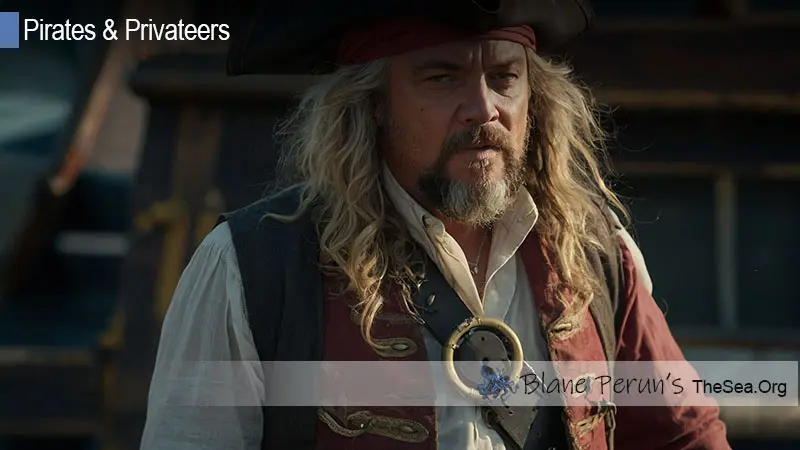
Who Was Paulsgrave Williams?
Most pirates of the Golden Age were driven to the sea by poverty, desperation, or naval desertion. Paulsgrave Williams was different. He was a prosperous goldsmith from Block Island, Rhode Island — a man of means with a family, a trade, and a comfortable life. Yet in 1715, he walked away from all of it to become one of the most active pirates of his era.
The question that has puzzled historians ever since: why would a wealthy, respected man choose piracy?
A Wealthy Man Turned Pirate
Williams was born around 1680 and built a successful goldsmith business in Newport, Rhode Island. He was well-connected, educated, and had social standing that most men of his time could only dream of. His decision to join the pirate crew of Samuel Bellamy — better known as “Black Sam” — was entirely voluntary and deliberate.
The two men met around 1715 and formed an immediate partnership. Bellamy provided the charisma and command; Williams provided capital, connections, and business acumen. Together they would terrorize Atlantic shipping lanes for the next two years.
The Partnership With Black Sam Bellamy
Williams served as one of Bellamy’s most trusted lieutenants and eventually commanded his own vessel. The partnership was remarkably successful. By 1717, Bellamy’s fleet — with Williams playing a key role — had captured over 50 ships, making them among the most prolific pirates of the Golden Age.
Their biggest prize was the Whydah Gally, a former slave ship they captured in February 1717. The Whydah became Bellamy’s flagship and one of the most treasure-laden pirate ships ever documented. Williams was present for the capture and participated in transferring the plunder.
The Wreck of the Whydah
On April 26, 1717, a violent nor’easter struck the New England coast. The Whydah was driven onto the shoals off Wellfleet, Cape Cod, and sank with nearly all hands. Of the 146 men aboard, only two survived. Samuel Bellamy went down with his ship.
Williams was not aboard the Whydah that night. He was commanding a separate vessel in the fleet and survived the storm. The loss of Bellamy was a devastating blow — he had lost his closest partner and the most powerful ship in their operation.
After Bellamy: Going It Alone
Rather than surrender or retire, Williams continued his piratical career after Bellamy’s death. He operated independently for a time, targeting merchant vessels along the Atlantic coast and in the Caribbean. His knowledge of trade routes — likely informed by his years as a merchant goldsmith — made him a capable and dangerous pirate on his own terms.
His activities eventually drew the attention of colonial authorities. After several years of continued piracy, Williams simply disappeared from the historical record. Whether he was captured, killed at sea, or successfully retired under a false identity remains unknown.
Why Did He Do It?
Historians have offered several theories. Some suggest Williams was drawn by the promise of greater wealth — even a successful goldsmith couldn’t accumulate the kind of riches that a single successful pirate raid could yield. Others point to the era’s romanticized view of piracy as a form of rebellion against the rigid class structures of colonial society.
Bellamy himself was known for speeches about equality and freedom — ideas that resonated with men across the social spectrum. Williams may have genuinely believed in the pirate utopia Bellamy preached. Or he may simply have been seduced by adventure.
His Legacy
Paulsgrave Williams is a footnote in most piracy histories, overshadowed by the more famous Bellamy. But his story offers something rare: a window into why someone with everything to lose might choose the pirate life. He wasn’t desperate. He wasn’t coerced. He chose it.
The Whydah was discovered by explorer Barry Clifford in 1984 off Cape Cod. It remains the only fully authenticated Golden Age pirate shipwreck ever recovered, and its artifacts — including thousands of coins, weapons, and personal items — are on display at the Whydah Pirate Museum in Provincetown, Massachusetts. Williams’ role in the Whydah‘s story connects him permanently to one of maritime history’s most remarkable discoveries.
Frequently Asked Questions
Was Paulsgrave Williams a real pirate?
Yes. Williams was a documented Golden Age pirate who operated primarily between 1715 and the early 1720s alongside Samuel Bellamy and independently after Bellamy’s death.
What happened to Paulsgrave Williams?
His fate is unknown. He disappears from historical records sometime in the early 1720s. He was not aboard the Whydah when it sank in 1717 and survived that disaster, but what happened to him afterward has never been confirmed.
How was Williams connected to the Whydah?
Williams was part of Bellamy’s fleet when the Whydah was captured in 1717 and participated in the pirating operation. He survived the storm that sank the Whydah because he was commanding a separate vessel that night.