The Darkness Hunter
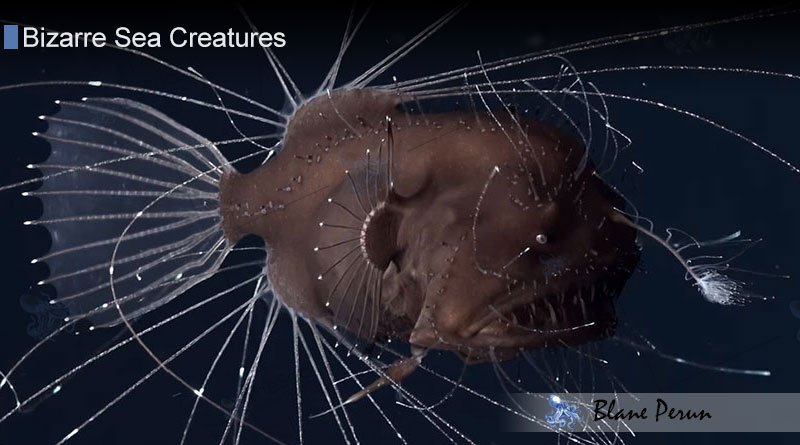
The deep sea anglerfish — encompassing roughly 200+ species across several families — is the most recognizable deep-sea animal in popular culture, and for good reason. The bioluminescent lure dangling from the forehead. The enormous, fang-filled jaws. The nightmarish appearance in a world of perpetual darkness. But the biology behind the appearance is even stranger than the creature looks.
The Lure
The anglerfish’s most famous feature — the esca, or bioluminescent lure — is a modified dorsal fin ray that has migrated forward over millions of years to dangle above the mouth. The glow comes from bioluminescent bacteria that live symbiotically within the esca. The anglerfish cannot produce its own light; it cultivates a colony of light-producing bacteria and houses them in the tip of the lure.
Prey attracted by the glow swim toward it — and into the anglerfish’s enormous expandable mouth. The jaws and stomach can stretch dramatically to accommodate prey up to twice the anglerfish’s own size. In the food-scarce deep sea, no meal opportunity can be wasted.
The Most Extreme Sexual Dimorphism on Earth
In many anglerfish species, the males and females are so different that they were originally classified as separate species. Females are the large, lure-bearing animals — the ones that look like anglerfish. Males are tiny, a fraction of the female’s size, with no lure, no large jaws, and eyes adapted for finding females by scent rather than hunting prey.
When a male finds a female, he bites into her body. In some species, he releases enzymes that begin to fuse his tissues to hers. Over weeks, his body merges with the female — his bloodstream connecting to hers, his organs atrophying, his eyes degenerating — until he becomes a permanent sperm-producing appendage on her body. A single female can carry multiple males fused to her simultaneously. This sexual parasitism is the most extreme example of the strategy anywhere in the animal kingdom.
Depth and Distribution
Deep sea anglerfish inhabit the bathypelagic and abyssopelagic zones — 1,000–4,000+ meters — in all major ocean basins. They are rarely seen alive; most knowledge comes from specimens trawled from the deep or recovered from the stomachs of larger predators.
FAQs
Are deep sea anglerfish dangerous to humans?
No. They live far too deep to encounter humans and are physically too small to pose a threat — most species are 20–30 cm long.
Can anglerfish see?
Females have functional eyes adapted for detecting bioluminescence in near-total darkness. Males have eyes adapted primarily for detecting the pheromone trails of females.